Bed Bug Annihilator

Portable, insulated heat chamber kills bed bugs. Rid your clothes of bed bugs in minutes. Click here

Cimex Rest Assured

The all-natural bed bug killing enzyme spray. Odorless. Non-staining. Click here

Free Pest ID

Don't know what kind of pest you are dealing with? Let us ID it for you for free. Click here

Bed Bugs

Bed Bugs

Information About Bed Bugs

Bed bugs are nocturnal insects that feed off of human blood. Since 2006, a dramatic increase of bed bug complaints have been reported by pest management companies all across the United States. By the end of World War II, bed bugs had been all but eradicated in this country. However, in recent years the resurgence of these pests has been noticed in extremely high quantities.

Exact reasons behind this latest epidemic are unclear, but experts believe that there are four contributing factors: the main pesticide used during the WWII epidemic, DDT, has been banned by the EPA; bed bugs have adapted and become tolerant of certain solutions that used to kill them; an increase in the amount of international travel has been able to spread this hitch-hiking pest; lack of awareness and precautions taken by the general public.

Due to the recent outbreak and epidemic, a number of new companies have emerged within the bed bug industry to help combat these pests.

ShowClassifications & Types

Bed bugs (or bedbugs), are classified as Cimicidae. The species most commonly seen in the United States is Cimex lectularius. They are small parasitic insects, part of a species that prefer to feed on human blood, known as obligatory hematophagous (bloodsucking) insects.

The other subsets of Cimicidae family that feed on warm-blooded animals, are Cimex adjunctus, Cimex antennatus, Cimex brevis, Cimex hemipterus, Cimex incrassatus, Cimex latipennis and Cimex pilosellus. Included in these categories are bat bugs, poultry bugs and swallow bugs.

Each bug requires a different treatment approach and correct identification of the type of species involved is essential to effective solutions.

ShowAnatomy

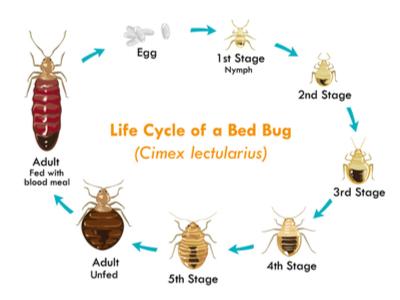
Bed bugs have six life stages, of which only one is an adult stage and the rest are immature stages. When molting from one stage to another, the bed bug will shed its skin. The exoskeletons left behind are clear, empty shells of themselves.

Bed bugs go through a gradual metamorphosis in order to reach their adult stage. The immature bed bugs are referred to as nymphs. In order to molt from one stage to the next, the bed bug will require a blood meal and the ideal condition for them to feed are when temperatures are above 70°F.

Studies differ as to the exact length of time it takes for bed bugs to reach adulthood, however one thing is for certain: bed bugs will molt five times before reaching the adult stage. The length of time it takes the nymph to go through the different life stages before reaching the sixth and final adulthood stage varies based on external conditions and has been seen to last anywhere from three to six weeks.

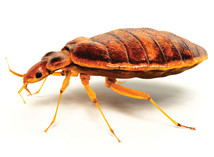
Bed bug eggs are white and approximately 1/32 inch long. All bed bugs are oval shaped and have six legs. Their feet have claws, not pads, making it harder for bed bugs to move about freely on slicker surfaces, such as plastic or metal.

Nymphs look different depending on the stage in their lifecycle. Newly hatched nymphs are colorless and practically translucent.  Nymphs range from 1.3mm to 5mm in length.

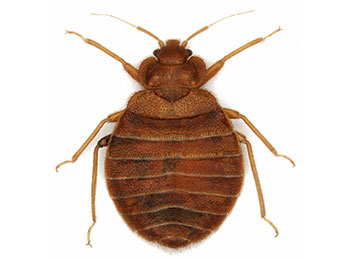
An unfed adult bed bug has a mahogany to rusty brown color. Approximately 1/4 to 3/8 inches long , they are wingless insects that have flattened on top and bottom, with microscopic hairs that give the impression of a wrinkled appearance.  After feeding, the bug is engorged with blood, increasing the body length and swelling at sides and typically expresses more of a dull-red or red-brown color.

Bed bug mouthparts are usually tucked underneath the body when not in use. The elongated proboscis will extend when ready to begin feeding.

ShowLifecycle, Breeding & Feeding Habits

Bed bugs only become fertile upon reaching their final, adult life stage. Bed bugs mate by what is known as traumatic insemination: the male pierces the female’s abdomen with hypodermic genetalia. The ejaculation goes directly into the body cavity and is carried by the haemolymph (blood) to a sperm storage structure (seminal conceptacles). Fertilization is eventually carried out in the ovaries. (Note: sexual attraction among bed bugs is based on size and often males try to mate with other males.)

On average, a female bed bug will lay 131 eggs in her lifetime, or approximately one to five eggs each day. When the female lays her eggs, they are usually deposited in batches of 10-50 (but are never laid at temperatures less than 50°F). They are left in cracks and crevices, as this is the bed bug’s secure location. These havens can be found in bed frames, floors, walls and other similar sites within the house or about. The eggs are coated with a sticky surface, allowing them to attach to the surface on which they are deposited. The eggs can take anywhere from six to 28 days to hatch, depending on the environmental settings and temperatures.  Bed bugs develop very8 quickly and can reproduce so often that it is possible for bed bugs to produce offspring of 5-7 generations in one year.

As soon as they hatch, the nymphs look to find a host to begin feeding. Bed bugs detect food sources by sensing carbon dioxide and warmth that is expelled from their human prey. In some cases they are attracted to certain chemicals. Once they find the food source and are ready to eat, they attach to the skin and begin to probe for a good ‘access point.’ Bed bugs are nocturnal creatures, feeding only at nights (usually between 1am-4am when the food source is in its deepest sleeping point, although they will feed during the daytime if necessary).

It takes anywhere from 3-10 minutes for a bed bug to complete a meal, by which time they are completely engorged. However, once they leave the host, they will return to their hiding place for several days in order to completely digest the meal. This cycle is repeated each time the bed bugs are hungry. Normally, bed bugs attempt to feed every five to 10 days. It is unclear as to exactly how long bed bugs can survive without meals, but the latest studies suggest that adults can't survive longer than 70 days without feeding.  Nymphs are believed to be able to last anywhere from several weeks (during warmer periods) to several months (in colder settings), while adults are believed to be able to last anywhere from a couple of months to almost a year if required.

The proboscis that bed bugs use for feeding contains two hollow feeding tubes, shaped liked tongues. These stylets emerge when feeding and both pierce the skin of the host: one tube is used to inject saliva into the host, which contains anticoagulants and anesthetics that act as a numbing agent; the other tube is used to extract the blood from the host. (Note: The DNA from human blood can be recovered within the bed bug for up to 90 days, which can be useful for forensic purposes if ever needed.)

ShowEnvironments & Activities

Bed bugs may be found in various environments and places. They do not discriminate based on gender, race, wealth, cleanliness or dirtiness – their only desire is that they find a warm-blooded host to feed off.

Bed bugs can survive a wide-range of temperatures. In the cold (~61°F), bed bugs can enter a semi-hibernation and survive longer but can’t survive longer than 15 minutes when exposed to temperatures less than -26°F.  Bed bugs can survive low humidity in temperatures around 95-104°F although younger nymphs are not as tolerant of that temperature. Adult stage thermal death point is 113°F. All stages of bed bugs will be killed after seven minutes of exposure to heat of 115°F or above and are not able to survive large doses of carbon dioxide.

Since they are nocturnal and feed off of humans, who are typically asleep at night, their main hiding places / habitats are often found in the beds or near the beds, which is why they have gotten the name ‘bed bugs’. However, they are often found outside of the bedroom, as they have been known to travel up to 100 feet to their food source to have a blood meal.

Bed bugs can be found in many different types of environments: houses, apartments,  office buildings, hospitals, retail stores, schools and dormitories, movie theaters, public transportation, even 5-star hotels!

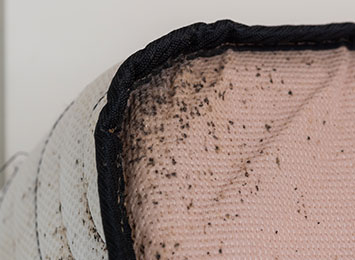
Hiding places may be identified by black or brown spots on surfaces where the bed bugs live. This “peppering” is the dried feces of the insect and is usually seen in heavy infestations. Other telltale signs are eggs, eggshells and exoskeleton shells left behind by the bugs.

While bed bugs will mainly be located within the seams of the mattress or covers during the beginning of an infestation, they will begin to spread out to the bedpost, frames, box springs and other surrounding objects to allow the population to expand. In very heavy infestations bed bugs can be found in the baseboards, wall voids, electrical switch plates, window casings, pictures and picture frames and wallpaper. Once they are in the walls, it is very easy for infestations to begin to spread from one neighboring apartment to another. Bed bugs might even be found in backpacks, car seats and other temporary locations as they move from habitat to habitat.

Bed bugs are terrific hitch-hikers. People easily transport bed bugs from work to their home or from home to their office. They also are often brought into homes from secondhand clothes, furniture and other articles, or even from new products when shipped to a house from an infested warehouse. They will cling on to any item they come into contact with and transport themselves from one location to another by taking rides on clothes, boxes, baggage, laundry and furniture. Once they reach a suitable location for breeding and feeding, ie. a home, the infestation begins to develop and spread.

Bed bugs normally prefer narrow spaces, such as cracks and crevices and have problems walking on glass, metal, plastic, polished surfaces. Wood, fabric and paper surfaces are preferable and they particularly like places where they can feel a rough surface on their legs and backs at the same time. Preferences or not, during heavy infestations, bed bugs will find shelter anywhere they can when space runs out in the preferred locations.

ShowDangers & Effects On Humans

Bed bugs are certainly frustrating insects to deal with and can cause emotional, physical and mental torment on their victims. For example, a heavy infestation can emit an offensive odor due to an oily liquid expelled from the bed bug, which can be very unpleasant to humans. Additionally, heavy infestations can result in ‘peppering’ of insect excrements on furniture and upholstery, in some cases ruining or destroying the object. These issues can certainly result in physical and psychological effects on people who encounter bed bug infestations in their home or at work.

As mentioned, bed bugs can have physical effects on humans, such as skin rashes and allergic reactions, in some cases developing into swells or ‘bite marks.’  Bed bug bites (‘cimicosis’) in many cases cause no visible effects to the human prey, but in some cases bite marks, or in extreme cases prominent blisters, may be noticed. People may develop allergic reactions to the protein in the saliva that is injected into the skin by the bed bug while feeding. Itchy, red spots, and in some cases even burning sensations, may be noticed after the anesthetic wears off (usually a couple of hours or even days after being bitten, making it difficult to determine the exact location where bed bugs are encountered) and may last for a week or more. These reactions usually cause a colorless bump at the center of the bite location (in contrast to flea bites that are red in the center).  However, most people do not have  any reactions at all to bed bug bites. In some cases, mosquito bites are often confused for bed bug bites.

Occasional bites indicate that there is a potential infestation brewing, usually with just adults in that location. However, once bites become more consistent and plentiful, this typically indicates that a full infestation has emerged and the bites are from the adults and the nymphs.

Most importantly, although they carry up to 28  human pathogens including the fatal MRSA (methicillin-resistant Staphylococcus aureus) Staph infection, bed bugs are not known to spread any diseases to their human hosts.

ShowControl & Treatment

Management and control is primarily based on finding the locations of where they bed bugs hide and keeping those areas as thoroughly clean as possible. Throughout all stages of a bed bug’s life, it is possible to see a bed bug through visual inspection, if looking properly.

There are several methods to treat for bed bugs once infestation occurs and one can take certain precautions to help reduce the risk of contracting bed bugs.

Avoid subway benches, flea markets, buying used clothing or borrowing from friends and do not bring home discarded items. Cracks and crevices should be sealed with caulk or other substances to reduce entry points. Vacuum all upholstery, mattresses and pillows. Launder all clothing and bedding in the warmest setting possible, and dried using high heat. Use mattress covers that are tightly sealed.

Get rid of any bedskirts or dust ruffles and keep blankets or covers off of the floor. Additionally, products like petroleum jelly can be coated around the legs of the bed to prevent the bugs from climbing up to the bed. There are also ‘climb-up’ monitors that can help trap the bed bugs at the base of the bed.

If infestation occurs, mattresses, box springs, couches and other upholstered furniture or cushions should be treated with “dry” steam using professional-grade steamers with low vapor flow rates. If possible, it is suggested to use two at a time, this way you can allow one unit to heat up while using the second for treatments. Steam should be expelled in a manner to reduce the risk of blowing the bed bugs out of their hiding spots. It is also recommended that the steam wand pass over one foot every ten seconds to ensure enough heat has been provided to treat that area. It is best to hire a professional to handle these types of treatments. Assured Environments specializes in all types of bed bug solutions for New York and New Jersey.

Certain pesticides, both natural and green solutions as well as chemicals are available for use in eradicating bed bugs. Cimex Rest Assured, an all-natural bed bug killing spray that is distributed by Assured Environments, is an excellent solution for treating small bed bug infestations. This odorless, non-staining, non-flammable formula is made from enzymes that dehydrate bed bugs and instantly kills them. It is completely safe to humans and pets and is a great alternative to some of the common, more harmful pesticides.

Some chemical treatments are available as well: Bedlam and Sterifab. These are useful for treating sensitive areas, such as carpets and mattresses. However, their use is strongly cautioned as they are dangerous, flammable and toxic, leaving up to a 7 day residual. For more information about the use of these pesticides, please see our Alternative Pesticide Solutions section of this website or contact your local pest control expert.

ShowReferences

5 things you may not know

Bed bugs are nocturnal insects that feed off of human blood. Bed bugs have 6 life stages: one adult & five immature stages. Bed bugs are one of the most evasive insects to treat. Bed bugs are not known to transmit any diseases. Bed bugs have been known to go more than a year without feeding.
All Rights Reserved © 2012