© 2026 Ramac US, LLC © Copyright Assured Environments. All Rights Reserved
Despite their name, carpet beetles don’t just infest carpet. In commercial environments, they can systemically destroy upholstered furniture, clothing, linens, and stored textiles in office complexes, healthcare facilities, warehouses, and hotel rooms.
Because they are small and reclusive, an infestation often goes unnoticed until irreversible damage occurs. For businesses in New York, New Jersey, and Connecticut, understanding the origin and behavior of these "carpet bugs" is the first step in protecting your bottom line.
What Are Carpet Beetles and Why Do They Invade Buildings?
Carpet beetles are small, oval-shaped insects belonging to the family Dermestidae. While adult carpet beetles primarily feed on pollen and nectar, the larva stage is responsible for structural damage. These "bristly" larvae consume natural animal-based fibers, including wool, silk, fur, felt, and leather. In commercial settings, the three most common species encountered are the varied carpet beetle, the furniture carpet beetle, and the black carpet beetle.
Commercial buildings and shared housing offer everything carpet beetles need to survive. Warmth, quiet spots, and plenty of organic food sources. If larvae continue to feed and grow unnoticed, a small problem can quickly escalate into a full-blown infestation that can threaten your property’s assets and reputation.

Where Do Carpet Beetles Come From?
Carpet beetles live and breed outdoors. They are often found outside around flowers, bird nests, and plants, where they feed on pollen and nectar. The primary way carpet beetles enter a building is from the immediate outdoor environment. Adult beetles are strong fliers and naturally attracted to the light emitted from windows and doors.
Where Do Carpet Beetles Live and Hide Indoors?
Once inside, carpet beetles rapidly migrate between rooms to find food sources like wool, fur, hair, and stored food. They usually settle in quiet, hidden places, such as closets, storage rooms, wall spaces, under carpets, and behind heavy furniture. Females strategically lay their eggs in these hidden spots, often near a food source like lint or debris buildup in kitchen floor cracks or baseboards, ensuring larvae have immediate access to nourishment.
Since they remain largely out of sight, initial signs of an infestation are often shed larval skins or damaged fabric, not the bugs themselves. Standard cleaning methods, like regular vacuuming, frequently miss these secluded spots, allowing infestations to go unnoticed until extensive damage is done. Professional pest control is recommended to locate the breeding source and ensure complete elimination of all larvae.
How Do Carpet Beetles Get Into Homes and Commercial Buildings?
Carpet beetles enter buildings in several ways. Open doors and windows are common entry points, especially during warmer months when adult beetles are active. Cut flowers, secondhand furniture, and stored goods can all carry adult beetles or larvae inside without notice. In multi-unit buildings, carpet beetles may move between spaces through shared walls or utility lines.
Nearby landscaping, bird nests, or stored materials can all support beetle populations that eventually move indoors.
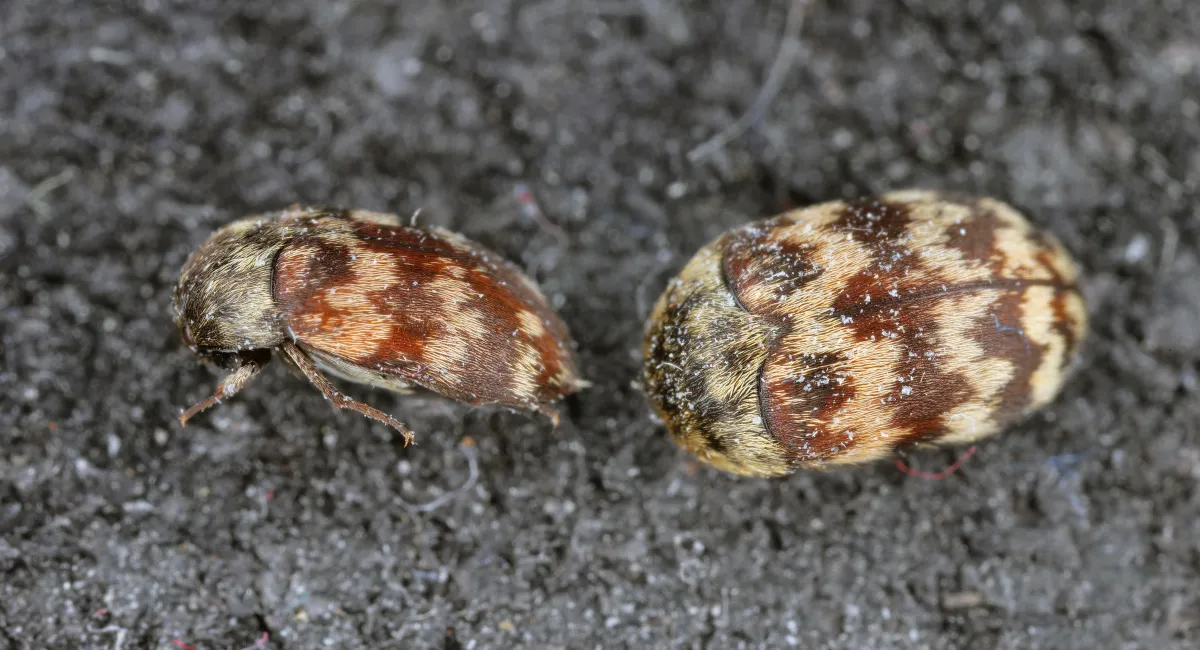
How Do I Know If I Have A Carpet Beetle Infestation?
Signs of a carpet beetle problem are often subtle at first. However, when you know what to look for, you can develop a strategy to prevent a large outbreak. Look for these indicators:
- Shed Larval Skins: As larvae grow, they leave behind translucent, brownish skins in corners, under rugs, or in folds of stored fabric.
- Irregular Holes: Unlike moths, which leave scattered small holes, carpet beetle larvae tend to graze on a large area of the fabric surface or eat through the base threads.
- Adults on Windowsills: In the spring, you may see small, dark beetles congregating near windows as they attempt to fly back outside to mate.
- Damage to Taxidermy: In hospitality or retail spaces with furs or animal mounts, larvae will clip hairs at the base, resulting in distinct bald spots.
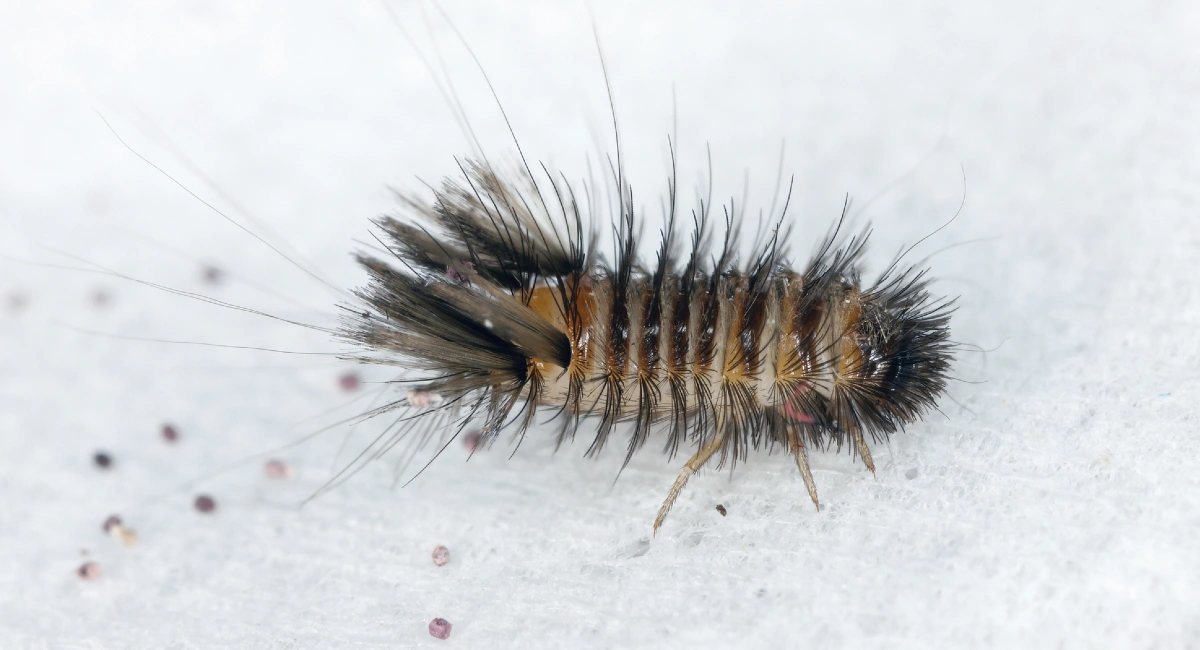
How Do I Get Rid Of Carpet Beetles?
There are plenty of ways to get rid of carpet beetles; however, for commercial properties, DIY methods are rarely sufficient to clear a large-scale infestation. Nevertheless, you can begin by following these steps:
- Deep Extraction Vacuuming: Focus on edges, cracks, and crevices where lint and hair accumulate.
- Thermal Treatment: Laundering linens or uniforms at high temperatures can kill eggs and larvae.
- Clean with Vinegar: Wiping down hard surfaces with a vinegar solution can remove food traces, though it will not reach larvae hidden in wall voids.
Professional intervention is required to find the source nest. Carpet Beetle Control Services from Assured Environments focus on a comprehensive Integrated Pest Management (IPM) strategy. We identify the specific species, locate the breeding source, and apply targeted treatments that protect your property’s textiles and reputation. Contact Assured Environments today for a professional commercial inspection.
Book Your Free Pest Inspection Today
Our local technicians will assess your property and recommend tailored solutions. Fast, friendly, and completely obligation-free.
- Safe, targeted treatments
- Local experts, fast response
- Trusted, trained technicians