800-942-7123 Call Now Book a Free Inspection

Carpet beetles are an easily overlooked threat to commercial properties across the tri-state area. In New Jersey, New York, and Connecticut, several species are active year-round, secretly damaging textiles, stored goods, and animal-based materials before most businesses notice any signs of an infestation.

Due to their small size and preference for dark, undisturbed spaces, carpet beetle populations can grow significantly before they are detected. For businesses in hospitality, retail, property management, and any industry that stores or handles textiles, early identification and professional control can save time and money by preventing large invasions.

Quick Facts About Carpet Beetles

  • Carpet beetles are tiny, measuring only about 1/8 of an inch in length as adults
  • Larvae cause the most damage, chewing irregular holes through fabrics, carpets, and stored goods
  • Adult carpet beetles can fly and enter buildings through open doors, windows, and HVAC systems
  • They are attracted to animal-based materials, including wool, silk, leather, fur, and feathers
  • A single beetle sighting may indicate thousands more hidden away inside your building
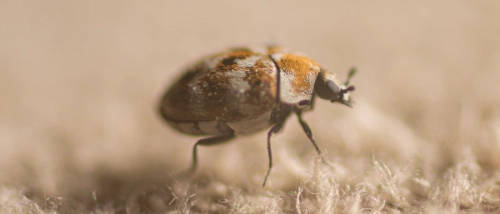
A carpet beetle

What Are Carpet Beetles

Carpet beetles are small, hard-shelled insects often confused with bed bugs. Adults reach 1/8 inch with oval, shiny wing casings. Varieties include the dark black carpet beetle, spotted furniture carpet beetle, and patterned varied carpet beetle.

The common black carpet beetle lacks spots and is highly destructive. Larvae are carrot-shaped with long golden-brown tail hairs. Unlike bed bugs, carpet beetles have visible wings and do not bite; the presence of bites typically indicates a bed bug issue.

Seeing Carpet Beetles?

Call now to book your free inspection.

Habitat, Diet, Life Cycle, and Behaviors

If you have carpet beetles, you’ll find them wherever animal-based materials are stored or present. Understanding their seasonal patterns and feeding habits makes it easier to identify risk areas within a commercial facility and take action before damage becomes widespread.

Where Do Carpet Beetles Live?

Damp, humid basements, attics, storage rooms, and wall voids are their preferred indoor habitat.  Eggs and larvae can be found along carpet edging, under upholstered furniture, inside closets, and behind baseboards.

What Do Carpet Beetles Eat?

Larvae feed on organic materials, including wool, silk, fur, leather, and feathers, as well as dried food products, while adults feed on pollen and nectar outdoors. However, females seek out suitable egg-laying sites indoors near accessible fabric or food sources.

Carpet Beetle Life Cycle

Carpet beetles undergo four stages: egg, larva, pupa, and adult. Females can lay between 40 and 100 eggs, which typically hatch within one to two weeks. The resulting larvae—often described as ‘woolly bears’ due to their bristly, hairy appearance—feed for several months before pupating. Depending on ambient temperature and food availability, the full life cycle can span from two months to several years. 

Carpet Beetle Behaviors

Adult carpet beetles migrate indoors to lay eggs near food sources. Their larvae are the primary cause of damage, feeding on natural fibers and shedding their skins as they develop. Key indicators of an active infestation include the presence of these molted skins and irregular holes in fabrics. Outside, you may spot adults near flowers and trees, where females often look for nesting sites in abandoned bird, rodent, or wasp nests.

Colorful carpets in a stack

How to Identify Carpet Beetle Damage

  • Irregular holes from burrowing larvae
  • Shed skins that leave a dusty residue
  • Dark fecal pellets
  • Damaged packaging
  • Live or dead beetles in dry goods

Commercial Concerns with Carpet Beetles

In commercial settings, carpet beetle infestations can cause significant financial damage by destroying textile inventory, upholstered fixtures, and stored goods before any visible signs appear on the surface. Businesses in hospitality, retail clothing, property management, and food storage are particularly vulnerable, as these environments provide both the materials and the undisturbed spaces that carpet beetle larvae need to thrive. A proactive inspection and monitoring program is the most effective way to protect inventory and avoid the reputational impact of a visible infestation in a customer-facing environment.

Frequently Asked Questions

Not necessarily. Carpet beetles are primarily attracted to animal-based materials and natural fibers rather than unsanitary conditions. Adult beetles fly in from outside and can enter even well-maintained buildings through windows, doors, or ventilation systems. That said, clutter, undisturbed storage areas, and accumulated organic debris can provide ideal harborage, so good housekeeping does reduce the risk.

Yes. Carpet beetle larvae feed continuously on wool, silk, leather, fur, feathers, and other natural materials, creating large, irregular holes that render textiles unsalable or unusable. In hospitality or retail settings, damage to upholstered furniture, carpeting, or clothing stock can be extensive by the time it becomes visible, making early detection critical.

Hospitality, retail clothing, museums, property management, and food storage businesses face the highest risk across the tri-state area. Any operation that stores natural fiber textiles, animal products, or dried organic goods in low-traffic areas is a potential target. Facilities with large HVAC systems, older buildings with gaps in the envelope, or significant amounts of stored inventory are especially vulnerable.

Yes. Adult carpet beetles are capable fliers and can enter buildings through HVAC intakes, open windows, gaps around utility penetrations, and ventilation ducts. Once inside, they move toward dark, undisturbed areas to lay eggs. Regular inspection of ductwork, storage rooms, and less-trafficked areas of high-rise offices is an important part of any integrated pest management program.

Find Your Local Branch

Go

Get in Touch

Contact Assured Environments now to arrange a free risk assessment and explore tailored solutions for your commercial site.

About Us

Learn about Assured Environments, the best commercial pest control for New York and the surrounding area. Get Assured Environments pest control services today.