800-942-7123 Call Now Book a Free Inspection

Despite all the myths and rumors, there’s nothing really unusual about earwigs. They’re nocturnal insects that are beneficial to the environment, but can show up in commercial properties and gardens in surprisingly large numbers. They’re not a health risk, however they can damage plants, leave unpleasant smells, and stain surfaces. Knowing what attracts them makes it a lot easier to get them out.

Quick Facts About Earwigs

  • Earwigs have distinctive pincers at the tip of their abdomen
  • Most species are omnivores that feed on plants and dead matter
  • Females can lay between 20 and 60 eggs in a single burrow
  • Earwigs are nocturnal and hide in damp, dark spots during the day
  • They can release a foul-smelling liquid when threatened or crushed
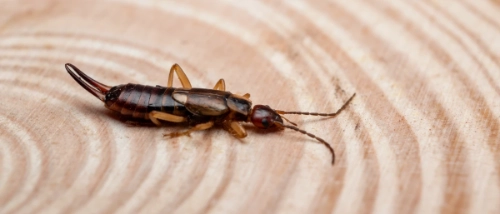
An earwig crawling on wood

What Are Earwigs?

Earwigs are small, reddish-brown to dark brown insects with bright yellow-brown legs and a distinctive set of forceps-like pincers, called cerci, at the tip of their abdomen. They're around five-eighths of an inch long and have a flat, elongated body. Most earwigs actually have wings shaped like a human ear when unfolded (that's actually where the name comes from), but they're not strong fliers and tend to stay on the ground. Despite their creepy appearance, they're more of a nuisance than a genuine threat.

Habitat, Diet, Life Cycle, and Behaviors

Seeing Earwigs?

Call now to book your free inspection.

Habitat, Diet, Life Cycle, and Behaviors

An earwig's lifestyle—from its activity patterns and diet to its preferred hiding spots—is primarily dictated by environmental factors such as seasonal changes, temperature, and humidity levels.

Where Do Earwigs Live?

Earwigs are most at home in dark, damp, and confined spaces. Outside, they shelter under leaves, mulch, logs, and garden debris. Inside, they'll head for basements, crawl spaces, bathrooms, and anywhere with a moisture problem or poor ventilation.

What Do Earwigs Eat?

Most earwigs are omnivores. They'll eat decaying plant and animal matter, but they'll also go after live plants—including seedlings, corn, cauliflower, and other crops. Indoors, they'll scavenge for any available organic material they can find.

Earwig Life Cycle

Earwigs reproduce in late summer or early fall. Females dig a small burrow and lay 20 to 60 eggs, which hatch in as few as 12 days. Nymphs go through four growth stages before reaching adulthood, gradually venturing further from the nest each time.

Earwig Behaviors

Earwigs are nocturnal and heat-sensitive, staying hidden in cool, damp spots during the day. They use their pincers to catch food and defend themselves. When threatened or crushed, they can release a foul-smelling liquid that stains fabric and carpeting.

Earwig Seasonality

Earwigs are most active and visible during spring and summer, when conditions are warm and moist. As temperatures rise, they seek out cooler, wetter hiding spots, which is when they're most likely to come indoors. In fall and winter, activity slows down significantly.
How To Get Rid of Earwigs

Clear away garden debris, fix moisture issues, and seal up cracks around your building's perimeter. If you've got a large infestation, it's worth calling a professional. Earwig problems often suggest a larger, underlying issue that needs inspection and a targeted treatment plan.


Frequently Asked Questions

Earwigs are moisture-seeking insects that move indoors when outdoor conditions become too hot, dry, or cold. Commercial properties with loading docks, basement storage areas, and poorly sealed utility penetrations are particularly vulnerable. They are most commonly found in janitorial rooms, kitchens, and any area where humidity levels are consistently high.

Earwigs are not aggressive and their pinch is rarely harmful, but their presence in a commercial facility signals underlying moisture and structural issues that require attention. In food service or healthcare environments, any pest sighting carries regulatory and reputational risks that should be addressed promptly.

Reduce moisture around your building's perimeter by addressing drainage issues, fixing leaking pipes, and clearing organic debris from foundation walls. Seal gaps around doors, loading bays, and utility penetrations, and ensure exterior lighting is positioned away from entry points to reduce insect activity near the building.

Eliminating the damp conditions that attract earwigs is the essential first step, followed by a thorough inspection of entry points and harborage areas. For commercial facilities, a professional pest control program is the most reliable approach, ensuring treatments are compliant, targeted, and minimally disruptive to daily operations.

No. This is a persistent myth with no basis in fact. Earwigs have no interest in human ears and pose no such threat. Staff concerns can be addressed confidently, though the presence of earwigs should still be investigated as an indicator of wider moisture or structural vulnerabilities in the facility.

Find Your Local Branch

Go

Get in Touch

Contact Assured Environments now to arrange a free risk assessment and explore tailored solutions for your commercial site.

About Us

Learn about Assured Environments, the best commercial pest control for New York and the surrounding area. Get Assured Environments pest control services today.