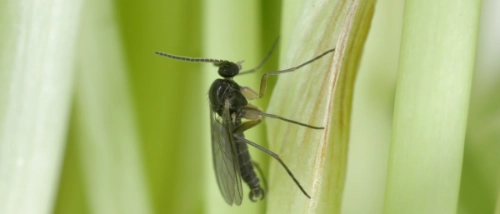
Habitat, Diet, Life Cycle, and Behaviors
Understanding the life cycle and breeding habits of fungus gnats makes it far easier to locate the source and eliminate them effectively.
Where Do Fungus Gnats Live?
Fungus gnats breed in moist, organic-rich environments. You'll find them around overwatered potted plants, drains, leaky pipes, greenhouses, and landscaped areas. Commercial spaces with indoor plants or atriums are common hotspots for activity.
What Do Fungus Gnats Eat?
Adults feed on fungi, nectar, and decaying organic matter. Larvae are the real troublemakers; they burrow into damp soil and feed on plant roots, fungi, and decomposing material, which can seriously weaken or kill plants over time.
Fungus Gnat Life Cycle
Fungus gnats go through four stages: egg, larva, pupa, and adult. The whole cycle takes just 20 to 28 days. Females lay up to 300 eggs at a time in moist soil. Larvae feed for around 10 days before pupating, then emerge as adults within a week.
Fungus Gnat Behaviors
Adults are attracted to light and swarm around indoor light sources, windows, and screens. They're active in warm, humid conditions and frequently hover close to soil and plants. They're not strong fliers and typically stay low to the ground, rather than moving around freely.
Fungus Gnat Seasonality
Fungus gnats are most active in warm, damp conditions. Heated buildings with overwatered plants can support fungus gnat activity year-round, regardless of the season outside.