800-942-7123 Call Now Book a Free Inspection

Moths aren’t directly harmful to people, but they pose sanitation risks and can destroy fabric and food if there is no early moth extermination.

Fabric moths can be a problem for clothing retail and hospitality services. Stored product moths can be a problem for food processing and warehouse & distribution businesses

Are you dealing with moths in your business? Assured Environments have been protecting New York, New Jersey, and Connecticut businesses from moths, and other pests for over 100 years.

Read on to find out how to identify fabric and stored product moths, the moth life cycle, where they live, what they eat, the problems they create, plus how to get rid of moths.

Quick Facts About Moths

  • Moths have feathery antennae, plus wings covered in microscopic scales
  • It’s the moth larvae that do the damage by eating fabrics, and grains
  • Adult moths don’t eat: they just mate, lay eggs and then die shortly afterwards
  • Fabric moth larvae prefer to eat silk, wool, cotton, and fur
  • Stored product moth larvae prefer to eat flour, rice, cereals, pasta, nuts, dried fruit, spices, and pet food

Habitat, Diet, Life Cycle, and Behaviors

Where Do Moths Live?

Fabric moths usually live in dark, undisturbed areas with access to animal-based fibers, such as closets, chests, or under heavy furniture. They prefer natural materials like wool, silk, and fur. 

Stored product moths live in kitchens, pantries, and food processing facilities, near grains, cereals, nuts, and pet food, often hiding in package crevices or cupboard corners.

What Do Moths Eat?

Most adult moth species don’t actually eat at all. Instead, they only live long enough to mate, and lay eggs. It’s the moth larvae that do the damage and are voracious eaters. But adult moths do still seek out food, as they lay their eggs on these food sources directly.

Stored product moth larvae prefer flour, rice, cereals, pasta, nuts, dried fruit, spices, and pet food.

Fabric moth larvae prefer natural fibers like silk, wool, cotton, and fur. They continuously burrow through and damage their food sources, leaving behind waste droppings, and shed skin.

Moth Life Cycle

Both fabric moths (like the webbing clothes moth) and meal moths (such as the Indian meal moth) have four life stages: egg, larvae, pupa, and adult.

The complete moth lifespan for fabric moths is usually 2 to 6 months, but can be longer in cooler conditions. The complete stored product moth lifespan, it’s usually 1 to 4 months.

Egg: The cycle begins when females deposit eggs onto suitable food sources—keratin-rich natural fibers for fabric moths or stored grains, and dried goods for meal moths.

Larvae: The larval stage is the most destructive, as this is when the insects feed voraciously, growing enough to shed their skin up to 45 times. Depending on temperature and food availability, moths could remain larvae for only 35 days or up to 2 and a half years.

Pupa: After reaching maturity, larvae spin cocoons to pupate near food sources. Pupation can take 8 days to 4 weeks when they emerge as adults.

Adults: They eventually emerge not to eat, but are ready to immediately mate and lay eggs.

Moth Behaviors

Fabric moths don’t fly frequently: they prefer to find a source of food and stick close to it. 

Stored product moths can make a quick flight but it tends to look clumsy or erratic.
 

Identifying Fabric Moths vs Stored Product Moths

Fabric Moths

Fabric moths include Webbing Clothes Moths, and Casemaking Clothes Moths.

Location: They infest closets, and clothing drawers, where their larvae can eat fabric in the dark.

Signs: Look for small, telltale bite holes, tearing, or other damage on hanging or folded clothing.

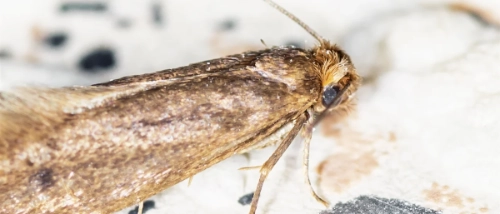
A webbing clothes moth on fabric

Webbing Clothes Moth

Size: Roughly ¼ inch body with a ½ inch wingspan.

Color: Gold, wheat-yellow, or tan, with red-golden hairs on the end of its head and tiny gold hairs spanning the length of its wings. Lower wings are lighter gold or tan than upper wings.

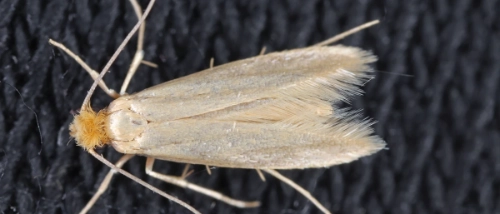
Casemaking clothes moth

Casemaking Clothes Moth

Size: Roughly ¼ inch body with a ½ inch wingspan.

Color: Gold or tan-yellow. Short golden hairs run the length of its body, particularly along its wings.

Casemaking clothes moths look similar to webbing clothes moths, but their wings are darker and have faint black spots.

Stored Product Moths

Stored product moths are also called pantry moths or meal moths They include the infamous Indian meal moth.

Location: They infest pantries, cupboards, and other places to find grains, cereals, and other food. They also prefer dark and damp places.

Signs: Look for small rips or tears in cereal or pasta boxes, small holes in grain products, or droppings in pantries.

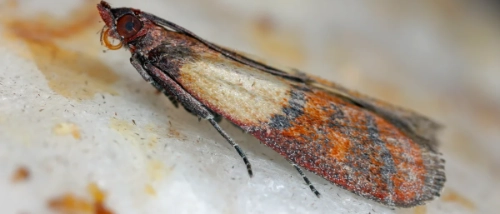
An Indian moth

Indian Meal Moth

Size: ½ inch body with an ¾ inch wingspan.

Color: Prominent wings are multicolored; the outer ⅔ of the wings are bronze or red-brown with a copper sheen. The last ⅓ closest to the moth’s head, is gray or silver-white. The Indian Meal Moths’ head, and thorax are gray-brown, and its abdomen is brown with a copper sheen.

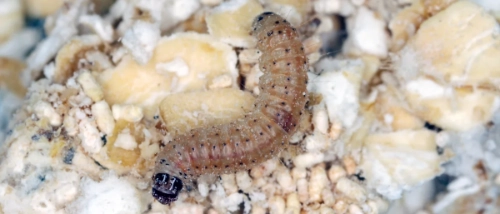
The larval stage of a moth

Larvae

The adult moth is rarely the one causing direct damage. It is the larvae hatching from hidden moth eggs that aggressively destroy textiles and contaminate food. Moth larvae look like tiny caterpillars.

How To Get Rid Of Moths

Moth repellents:
Cedar oil, lavender sachets, or chemical mothballs, can deter moths from laying eggs in clothes or pantries. While natural options are safer, they are primarily preventative and won't eliminate existing larvae. The best way to use moth repellents is in enclosed spaces like drawers or airtight containers to maintain their high concentration of vapor.

Fabric moths:

  • Inspect wool, silk, cashmere, fur, and other natural-fiber items for larvae or damage
  • Wash, dry-clean, or freeze infested items
  • Vacuum wardrobes, carpets, skirting boards, and upholstered furniture thoroughly 
  • Store clothing and other fabrics in plastic covers or sealable hard plastic containers
  • Keep the fabric storage rooms dry, and dehumidified

Stored product moths:

  • Empty cupboards and inspect all dry foods, including flour, rice, cereals, pasta, nuts, dried fruit, spices, and pet food
  • Throw away any infested products in sealed bags
  • Vacuum shelves, and crevices, and wipe storage areas clean
  • Store all your dry goods e.g. cereal, pasta, bread, sweets, and pet food in airtight glass or hard plastic containers

If a moth infestation is widespread or persists despite these measures, call in Assured Environments professional moth pest control service. Give us a call to get started with a free inspection.

See how Assured Environments can help your business for Moth Control Services in the Tri-State Area.

Frequently Asked Questions

Moths reproduce sexually. Once an adult female emerges from her cocoon, she releases pheromones to attract a male. After her eggs are fertilized, she finds a suitable food source to lay her eggs on.

Moths weave a silky casing around themselves when it’s time to pupate. Moth cocoon identification can be tricky: look for dark gray, brown or black casings in their food sources.

Moth larvae look like small, light colored caterpillars or worms. Newly hatched larvae can be the size and shape of rice grains.

Moths enter your business for two reasons: shelter and food. Seal your premises against moths and other pests. Always store food in sealed containers and keep your kitchen, catering and food production areas clean.

Book Commercial Moth Pest Control Services

Contact us today for a free, no-obligation quote.

Find Your Local Branch

Go

Get in Touch

Contact Assured Environments now to arrange a free risk assessment and explore tailored solutions for your commercial site.

About Us

Learn about Assured Environments, the best commercial pest control for New York and the surrounding area. Get Assured Environments pest control services today.