800-942-7123 Call Now Book a Free Inspection

Ladybugs are generally beneficial insects that help keep aphids and other plant-damaging pests in check. But when populations build up and start moving indoors to overwinter, they can quickly get out of hand. Understanding their habits and what draws them in makes them much easier to manage.

Quick Facts About Ladybugs

  • Ladybugs are beetles, not bugs, in the family Coccinellidae
  • A single ladybug can eat up to 50 aphids in one day
  • They release a mild toxin and unpleasant odor when threatened
  • Ladybugs gather in large groups using pheromones to attract others
  • Most adult ladybugs live for around one year after reaching adulthood
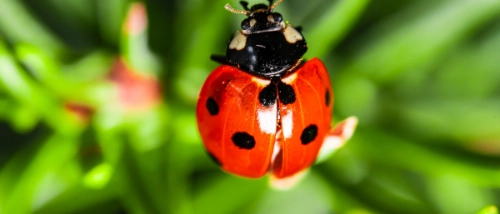
A ladybug on a green leaf

What Are Ladybugs?

Ladybugs are small, dome-shaped beetles ranging from 1 to 10 millimeters long. They're best known for their vibrant red or orange wing covers, called elytra, which are typically marked with black spots. The number of spots varies by species—some have two, some seven, and some nine. They have six legs, short antennae, and a rounded black head. Despite their cheerful appearance, large swarms indoors can become a genuine pest problem.

Habitat, Diet, Life Cycle, and Behaviors

Seeing Ladybugs?

Contact us today for your free inspection.

Habitat, Diet, Life Cycle, and Behaviors

Ladybug activity is dictated by the seasons and the availability of food. Where they live, what they eat, and how they behave all shift depending on temperature and conditions around them.

Where Do Ladybugs Live?

Ladybugs live wherever aphids and other small pests are found, in gardens, trees, and landscaping. When it gets cold, they move indoors, gravitating toward attics, crawl spaces, basements, and wall voids where they overwinter in large clusters.

What Do Ladybugs Eat?

Ladybugs are carnivorous and mostly eat aphids—up to 50 a day. Some species also feed on scale insects, mealybugs, and spider mites. They're considered beneficial insects because they naturally control many of the pests that damage crops and ornamental plants.

Ladybug Life Cycle

Ladybugs go through four stages: egg, larva, pupa, and adult. Females can lay hundreds of eggs at once, typically on the undersides of leaves near aphid colonies. Development speeds up in warm conditions, and most adults live for about one year after reaching maturity.

Ladybug Behaviors

Ladybugs release pheromones that attract others to the same location, which is why swarms can form quickly. They're temperature-sensitive and seek out sunlit, light-colored surfaces to warm up. When threatened, they produce a mild toxin and a noticeable, unpleasant smell.

Ladybug Seasonality

Often regarded as a sign that warmer weather is on the way, ladybugs are most active in spring, though they also appear in the fall. As temperatures drop, they seek warm shelter and can move into buildings in large numbers. Activity slows through winter, but they re-emerge when warmer weather returns in spring.
How To Get Rid of Ladybugs

A recommended starting point is to seal any cracks around baseboards, window frames, vents, and utility lines to cut off entry points. Vacuum up any clusters you find indoors and dispose of the bag immediately—this also removes the pheromone trails that attract more. For large or recurring infestations, a professional inspection will identify exactly where they're getting in and help prevent them from coming back.


Frequently Asked Questions

For the most part, yes. Ladybugs aren't dangerous to people, but they're not completely without issue either. They produce a mild toxin that can cause a reaction if ingested, and when they're threatened or die, they release an unpleasant odor that can stain surfaces and linger in enclosed spaces.

It depends on the species. The most familiar varieties have seven spots, but two-spotted and nine-spotted species also exist. Therefore, the number, size, and pattern of spots aren't a reliable way to identify exactly which type of ladybug you're looking at.

Yes, despite the name, ladybugs are beetles. They belong to the family Coccinellidae within the order Coleoptera, which covers all beetles. Like other beetles, they have hard wing covers called elytra that fold over their wings when they're not flying—a defining feature of the group.

Yes. Ladybugs are drawn to light and favor warm, light-colored surfaces that reflect sunlight. This is why you'll often find them clustering on south-facing walls and near windows. It also means lights inside a building can draw them in when they're looking for somewhere warm to overwinter.

They can, but it's rare. A ladybug might give you a small pinch in self-defense if it feels threatened, but it won't hurt much, and they don't carry any diseases. The main exception is if you have an allergy—in which case, even a bite or contact with their secretions can cause a mild reaction.

Find Your Local Branch

Go

Get in Touch

Contact Assured Environments now to arrange a free risk assessment and explore tailored solutions for your commercial site.

About Us

Learn about Assured Environments, the best commercial pest control for New York and the surrounding area. Get Assured Environments pest control services today.