Habitat, Diet, Life Cycle, and Behaviors
Where Do Webbing Clothes Moths Live?
Webbing clothes moths prefer to live in dark, humid areas where they can easily access food (natural fibers). They leave behind eggs, silk, shed skin, and pupae where they live, such as in wardrobes, dark corners of closets, storage boxes, and under heavy furniture.
What Do Webbing Clothes Moths Eat?
Webbing clothes larvae feed on natural fibers such as human hair, rodent hair, wool, fur, and feathers. They don’t usually feed on synthetic fabric, but they may do so if the fabric contains human perspiration or body oils, or if it's a blend of natural and synthetic fibers.
Adult clothing moths do not feed. Instead, the adults mate, deposit eggs on fibers, and die shortly thereafter. Both adult and larval webbing clothes moths are nocturnal. They feed, mate, and locate food sources at night and hide during the day, making them so difficult to spot.
Webbing Clothes Moth Life Cycle
Female adult clothes moths lay an average of 40 to 50 eggs on food sources and die shortly afterward. Warmer temperatures can accelerate egg development, allowing them to hatch in as little as four to 10 days.
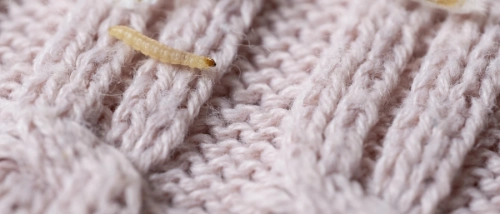
After hatching, the larvae (caterpillars) begin feeding. As larvae grow, they molt continuously up to 45 times. The larvae eventually pupate inside silk cocoons. This takes between one and four weeks, after which the newly emerged adult moths are ready to mate and restart the cycle.
Webbing Clothes Moth Behaviors
Unlike many other moth species, webbing clothes moths are not particularly good fliers and only fly for short distances. Webbing clothes moths are also not attracted to light. They are also photophobic, actively avoiding well-lit areas in favor of dark, secluded hiding spots. This behavior, combined with their limited ability to fly, makes them particularly difficult to detect and identify.
As webbing clothes moth larvae feed, they create small, circular holes in fabric. Inspect clothing stored in warehouses or retail spaces for irregular damage, such as tears or bite marks. Keep an eye out for pupae as well; larvae often weave them into silk cases directly onto the infested material.