800-942-7123 Call Now Book a Free Inspection

Lice are tiny parasitic insects that feed on blood to survive. They won’t last long if they don’t live on a human or animal host, but body lice can live in the seams of fabrics such as clothing, bedding, and mattresses.

So along with fleas, and bedbugs, lice are a big problem for business owners in the hospitality, and clothing retail industries. Protecting your employees and your customers is the best way to protect your brand and your business reputation.

At Assured Environments we’ve been protecting businesses and commercial properties across New York, New Jersey, and Connecticut from lice, and other pests for over a century.

Read on to find out more about lice, their life cycle, what a lice bug looks like, their habitat, diet, the dangers they bring to people and businesses, plus how to get rid of lice.

Quick Facts About Lice

  • Lice can’t fly or jump from host to host as they only spread by direct contact with their new host’s hair or clothing
  • Lice have distinctive hook-like claws at the ends of each of their legs, to cling to hair
  • Head lice, body lice, and pubic lice can’t survive on other parts of the human body
  • Body lice can spread epidemic typhus, trench fever, and relapsing fever when they feed on blood
  • They are temperature and light-sensitive, so they tend to prefer dark, warm environments

What Are Lice and What Do They Look Like?

Head Lice (Pediculus humanus capitis)

  • Tan to grayish-white, about the size of a sesame seed. Nymphs are the size of a pinhead
  • Lice eggs (nits) are firmly glued to individual hairs, close to the scalp
  • Spread through direct, prolonged head-to-head contact

Body Lice (Pediculus humanus humanus)

  • Similar in appearance to head lice but slightly larger
  • Spread through direct contact with an infested person or clothing
  • Lice eggs are laid in clothing, not on the body
  • Able to transmit diseases like typhus, and trench fever

Public Lice (Pthirus pubis)

  • Shorter and rounder than head or body lice, resembling small crabs
  • Primarily infest hair in the pubic or genital area—occasionally found on facial hair, armpits, or eyelashes
  • Usually spread through sexual contact or rarely through bedding or towels

Habitat, Diet, Life Cycle, and Behaviors

Where Do Lice Live?

Head Lice

Head lice only live on human scalps, clinging to hair shafts near the skin for warmth, and food.

Body Lice

Body lice live in the seams of clothing, and bedding, moving to the skin only to feed.

Pubic Lice

Pubic lice usually live in coarse body hair.

What Do Lice Eat?

All three species of common louse feed only on blood. They start feeding as soon as they’re born and continue through every developmental stage. Almost all lice feed on their hosts multiple times each day, biting down in multiple different places around the same area of the body.

Head lice can’t survive more than two days without a blood meal. If they’re removed from a host, they will starve relatively quickly. If you find lice in your building or clothing, it’s because they’ve been feeding recently.

Lice Life Cycle

Once lice become adults, reproduction becomes their main priority and they can start within ten hours of reaching adulthood. A single louse has about a 30-day life cycle from when its egg is laid to when it dies.

A single female head louse can produce 50 to 100 lice eggs in her lifetime. A female body louse can lay more than 200 lice eggs. Most lice lay 3 to 5 a day for as long as they live, with eggs hatching within 5 to 7 days.

Lice Behaviors

Contrary to popular belief, lice can’t fly, jump, or even “bounce” from host to host. How do lice spread? Lice only spread only by coming into direct contact with their host’s hair or clothing, using their hook-like claws on the ends of their legs to cling to hair follicles. They access new hosts either by transferring after direct contact between people or by latching onto a host via an article of clothing. 

Lice are temperature and light sensitive, so they tend to prefer dark, warm environments.
Signs of Louse Infestation

Lice leave behind signs of their presence with itchy red bite marks or sores on the scalp, neck, and shoulders. These are caused by allergic reactions to their saliva when lice bite.

You may also find tiny, teardrop-shaped white or yellow lice eggs in human hair. These eggs are called “nits” and are firmly glued to hair shafts near the skin.

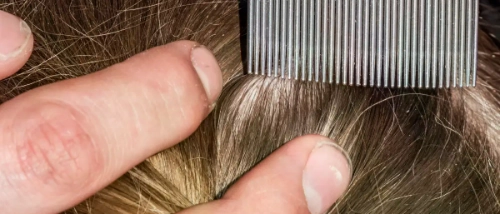
Nits are very small and may be difficult to see. But you can find them by brushing your head with a fine-toothed nit comb. When you examine your hair, and nit comb, you may also find lice themselves or lice nymphs.

How To Get Rid Of Lice

  • Head lice are treated with over-the-counter or prescription lice treatments, followed by careful combing with a fine-toothed nit comb to remove lice, and eggs.
  • Body lice are usually eliminated by washing the body thoroughly, and laundering clothing, bedding, and towels in hot water, or replacing infested items if they can’t be cleaned.
  • Pubic lice are treated with specific medicated lotions or shampoos. Sexual partners may also need the same louse treatment.

Always follow the product instructions carefully and seek medical advice if symptoms persist and the louse treatment is unsuccessful.

How Your Business Can Get Rid of Lice:

Lice infestations can be a big problem for many commercial concerns. See how the highly-trained team of experts at Assured Environments can give you peace of mind right from the start. 

Give us a call to get started with a free inspection.

Frequently Asked Questions

Very rarely. Because head lice can’t jump or fly and need to live on a human head to survive. They usually perish within 48 hours away from a scalp, so transmission through communal surfaces are extremely rare compared to direct head-to-head contact.

Focus on sanitizing shared upholstery, and headrests using high-heat vacuuming. Or isolate the furniture for 48 to 72 hours. Keep communication calm, and discreet to prevent unnecessary panic, emphasizing that lice do not reflect the general cleanliness of the building.

The hospitality and healthcare sectors experience lice problems as guests or patients bring in towels, bedding, and personal protective gear. Infestations of lice can affect other industries that involve close physical proximity or shared equipment, such as childcare centers, schools, and summer camps, also face a high transmission risk.

No. Commercial properties do not need to apply heavy chemical spraying or professional fumigation, as these methods are largely ineffective against lice and potentially harmful to occupants. Standard cleaning protocols, such as thorough vacuuming and laundering linens in hot water, are enough to eliminate any lice that have fallen off a host.

Book Commercial Lice Control Services

Contact us today for a free, no-obligation quote.

Find Your Local Branch

Go

Get in Touch

Contact Assured Environments now to arrange a free risk assessment and explore tailored solutions for your commercial site.

About Us

Learn about Assured Environments, the best commercial pest control for New York and the surrounding area. Get Assured Environments pest control services today.