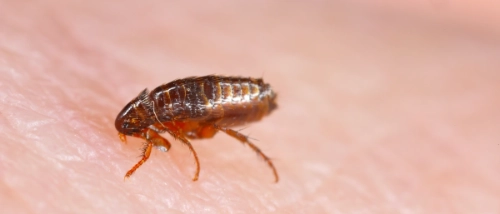
Habitat, Diet, Life Cycle, and Behaviors
As long as they can find a suitable host to provide warmth, food, and shelter, fleas can survive and thrive virtually anywhere.
Where Do Fleas Live?
Outside, fleas prefer the shade and cannot tolerate the sun for long. They live in trees, shrubs, and tall grass, waiting for hosts, like raccoons, foxes, and squirrels, to come along. When a stray animal or pet brings them inside, they’ll hide in textiles and pet bedding.
What Do Fleas Eat?
Fleas are parasitic insects that feed on mammals, including humans and pets. Most species have preferred hosts, such as cat or dog fleas, but they’ll feed on any warm-blooded animal when necessary. Adult fleas feed daily, using sharp mouthparts to consume up to 15 times their body weight in blood. Conversely, larvae do not feed directly on blood; instead, they survive on organic debris, skin cells, and adult flea dirt.
Flea Life Cycle
Fleas go through four stages: egg, larva, pupa, and adult. Eggs hatch within days, and larvae spin protective cocoons before emerging as adults. The full cycle can take just a few weeks or stretch to a year, depending on temperature and host availability.
Flea Behaviors
Fleas are semi-active around the clock, though more so at night. They're drawn to body heat, movement, and carbon dioxide. Without a host, adults survive only one to two weeks, but with regular access to blood, they can live up to 100 days or more.
Flea Seasonality
Flea activity peaks in spring and summer when warm, humid conditions help eggs and larvae develop fast. Numbers can drop in winter outdoors, but in heated buildings, fleas can remain active and keep reproducing year-round if hosts are present.