800-942-7123 Call Now Book a Free Inspection

Quick Facts About Stink Bugs

  • Stink bugs get their name because they possess glands in their thorax that release a pungent, foul-smelling liquid whenever the insect feels threatened or is crushed. 
  • The brown marmorated stink bug was accidentally introduced to the tri-state area from East Asia in the late 1990s and has spread rapidly through New Jersey, New York, and Connecticut.
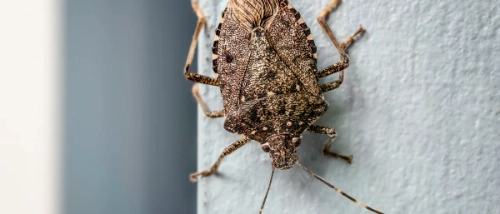
  • They are easily identified by their unique "shield" shape and a pair of long antennae with light-colored bands.
  • In late autumn, stink bugs exhibit "overwintering" behavior by seeking out warm, dry voids in apartments and office buildings to survive the cold. 
  • Stink bugs are primarily agricultural pests that use needle-like mouthparts to feed on a variety of fruits and ornamental plants
     
Spider on a hand

What Are Stink Bugs?

Stink bugs belong to the order Hemiptera, also known as true bugs. They have three body parts, six legs, and antennae. The most common species is the brown marmorated stink bug (Halyomorpha halys). 

While they vary in color, from brown to gray or dark green, stink bugs are most easily identified by their broad, “shield-shaped” abdomens.

Adult stink bugs are most active from spring to fall. In the spring, they emerge from their overwintering spots hungry and ready to reproduce. In the fall, they seek shelter from the cold or a safe place to hibernate, such as inside your office building.

Struggling with Stink Bugs?

Call now to book your free inspection.

Habitat, Diet, Life Cycle, and Behaviors

Where Do Stink Bugs Live?

Stink bugs typically inhabit fields and orchards during the summer months, but they migrate toward commercial buildings and residential properties as temperatures drop. Once they find a structure, they squeeze through cracks, crevices, or gaps in window frames to hide inside walls and attics. These dark, undisturbed voids provide the perfect environment for them to overwinter safely until spring.

What Do Stink Bugs Eat?

Stink bugs have a diverse, primarily plant-based diet, so don’t rely on any specific plant to survive. Their specialized mouthparts (stylets) are used to pierce the skin of a wide variety of plants, fruits, and vegetables. 

In agricultural settings throughout New York and New Jersey, they cause significant damage to crops such as apples, peaches, and soybeans. While they may enter your commercial property or office building, they’re unlikely to find a steady food source indoors and will not cause damage to building materials or pantry goods.

Stink Bug Life Cycle

The life cycle begins when a female lays clusters of light green, barrel-shaped eggs on the undersides of leaves during the warmer months. Once hatched, the nymphs undergo five distinct stages of growth, gradually developing their characteristic shield shape before reaching full maturity.

The typical lifespan of a stink bug is 6-8 months. Depending on the location, climate, and temperature, they may produce two or more generations a year.

Stink Bug Behaviors

Stink bugs aren’t dangerous to humans, but they’re definitely a nuisance. They congregate on the sides of buildings exposed to the sun, cluster indoors for warmth, and leave a stinking residue wherever they go. 

Signs that you have stink bugs in your business include:

  • Spotting stink bugs indoors
  • Unpleasant smells similar to rotten vegetables
  • Unexplained stains
  • Live or dead bugs
  • Damaged produce
  • Damaged to unrefrigerated produce
  • Destroyed crops
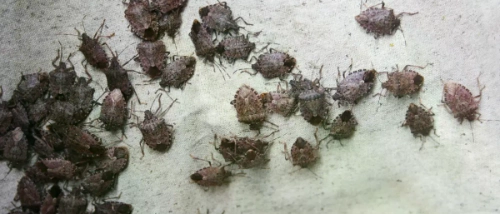
A small swarm of stink bugs on an exterior wall

The Seasonal Swarm and Odor Risks of Stink Bugs

Stink bugs do not bite or carry disease, but they can still cause problems for your business. They’re wired to hibernate in winter, and as the days become shorter in the fall, they’ll begin searching for a cozy place to settle until spring. 

If they can find an entrance, warm buildings make a good place to overwinter. This can be an issue, as they can release pheromones to “call” other stink bugs to gather, resulting in hundreds of stink bugs entering commercial buildings. Additionally, the warmth from building heating systems can keep stink bugs more active than they would normally be throughout the winter.

Stink bugs infamously secrete a foul-smelling liquid when threatened or crushed. This liquid can smell like coriander or rotten vegetables. Unfortunately, the scent can linger, and the liquid can stain surfaces, especially carpet or wood.

How To Get Rid of Stink Bugs

First of all, do not attempt to swat or squash stink bugs. As we’ve learned, they release a foul liquid and odor, which can also stain surfaces. The best way to get rid of stink bugs is a combination of physical removal and ongoing exclusion methods.

Exclusion is the most critical step in stopping them from entering your premises in the first place. Stink bugs are small and flat, so they can easily crawl through gaps in window screens or cracks around door frames.

Ensure your site teams incorporate these steps into maintenance routines:

  • Inspect the exterior of your site to identify entry points 
  • Use high-quality caulk to seal any openings 
  • Repair or replace damaged window screens immediately
  • Consider fitting a mesh over gaps in vents, pipes, and roof lines

Smaller clusters can be removed by sweeping them into a container or using a vacuum with a bag. If you’re facing quantities of stink bugs that are simply too large for your teams to remove, it’s time to call in professional pest control technicians.

Frequently Asked Questions About Stink Bugs

Stink bugs lay their eggs outdoors on the underside of leaves. They don’t build nests. Inside, they may gather in groups and seek secluded places to hide.

No. But some people may be sensitive or allergic to their stinky liquid. They spray their defensive stink from their thorax. If you get any liquid in your eyes, seek medical attention.

Stink bugs are wired to hibernate in winter. As the days become shorter in the fall, they begin to search for a cozy place to settle until spring. If they can find an entrance, warm buildings make a good place to overwinter. They enter the same way many pests do, crawling through cracks and gaps along foundations, doors, or open windows.

Luckily, the odor only lingers for a few hours. Use a mixture of hydrogen peroxide and baking soda to scrub the affected areas and air the room out. Equally, a deodorizer will help to cover the smell. If the scent is on your fingers, use lemon juice or toothpaste to remove it.

Yes. Outdoor lighting may draw them to your home. Indoors, you may find them enjoying the sunshine along south-facing windows.

Find Your Local Branch

Go

Get in Touch

Contact Assured Environments now to arrange a free risk assessment and explore tailored solutions for your commercial site.

About Us

Learn about Assured Environments, the best commercial pest control for New York and the surrounding area. Get Assured Environments pest control services today.