© 2026 Ramac US, LLC © Copyright Assured Environments. All Rights Reserved
Carpet beetles and bed bugs are two of the most commonly confused pests in commercial properties across New York, New Jersey, and Connecticut. Misidentifying one for the other can lead to wasted time, ineffective treatments, and growing infestations. Both are similar in size, share hiding habits, and in rare cases, produce skin reactions that look alike.
If you've noticed small, beetle-like insects around furniture, fabrics, or flooring in your nursing home, multi-occupancy building, or college dorm, you should investigate further to determine the species and stop them from spreading.
Neither is good news and can be problematic for tri-state commercial property managers, rental businesses, healthcare facilities, and the hospitality industry, which must comply with stringent health and safety standards. Use this carpet beetle vs. bed bug guide to help identify and manage the problem and keep staff and guests onside.

Key Differences Between Carpet Beetles and Bed Bugs
The main differences between bed bugs and carpet beetles stem from their distinctive behaviors and feeding habits. Carpet beetles are small insects primarily responsible for damaging fabrics, carpets, and stored items. Bed bugs, on the other hand, are parasites that feed only on human blood and hide near places where people sleep. Even though both pests are small and hard to see, they affect your home and health in very different ways.
A carpet beetle infestation often develops silently, with damage appearing long before the insects are visible, while bed bug infestations typically manifest through bites, blood spots, and increased nighttime irritation. They are considered a public health pest due to the mental distress, insomnia, and allergic reactions (including severe cases) they can provoke.

Where Carpet Beetles and Bed Bugs Live and Hide
Carpet beetles thrive around natural fibers, such as carpets, rugs, upholstered furniture, closets, and storage boxes. You might also see them near air vents, baseboards, and window sills, where adult beetles gain entry. Overhanging trees and vegetation can increase the chance of invasions and, therefore, contribute to carpet beetle infestations indoors.
Bed bugs like to stay close to people. They usually hide in mattresses, box springs, bed frames, headboards, and furniture in hotel guest rooms, communal break areas, and college dormitories. You can also find them in wall cracks, electrical outlets, or behind wallpaper. Unlike carpet beetles, bed bugs prefer to stay within 3 to 6 feet of sleeping areas because they often feed on blood. This is a key difference in distinguishing bed bugs from carpet beetles.
What Carpet Beetles and Bed Bugs Feed On
Their feeding habits offer a clear means of identification. While adult carpet beetles feed on pollen outside, their larvae are highly destructive indoors, consuming natural fibers such as wool, silk, and leather, as well as pet hair, stored food, lint, and dead insects. This larval appetite is the primary cause of property damage.
Bed bugs, in stark contrast, are exclusively blood feeders that typically target humans. They do not consume fabrics, food crumbs, or organic debris. Therefore, unexplained bites on occupants, coupled with an absence of damage to textiles or carpets, strongly indicate a bed bug infestation, since carpet beetles do not feed on people.
How Carpet Beetles and Bed Bugs Spread
Carpet beetles often enter properties through open windows, doors, or by hitching a ride on items like flowers, furniture, or clothes. Once indoors, they lay eggs in secluded, food-rich areas, allowing the infestation to spread slowly throughout the space, where conditions are favorable.Bed bugs, on the other hand, primarily spread through human activity. Travel is the main vehicle, as bed bugs can hide in luggage, clothing, and personal possessions. They can also easily move between units in apartments or hotel rooms.
Carpet Beetle Larvae Compared to Bed Bug Nymphs
It can be confusing to tell bed bug nymphs from carpet beetle larvae, though it's worth noting that bed bugs have nymphs, not true larvae. Carpet beetle larvae are small, elongated, and covered in bristly hairs. They are usually brown or tan and move slowly. These larvae cause most of the damage from carpet beetles.
Meanwhile, bed bug nymphs are smaller, flatter, and smoother. They resemble adult bed bugs but are lighter and more translucent until they feed. If you see hairs and a segmented body, it's probably a carpet beetle larva. Accurate identification at this stage is critical because the treatments are very different.
Carpet Beetle Bites Compared to Bed Bug Bites
"Carpet beetle bites vs. bed bug bites" is one of the most common searches we see from concerned property managers and tenants, and for good reason. The skin reactions can look remarkably similar, but the causes are entirely different.
- Bed bug bites are actual puncture wounds caused when the insect pierces the skin with an elongated mouthpart to draw blood. These bites often appear in clusters or lines on exposed skin and typically result in red, itchy, swollen welts. Reactions vary; some people show no visible signs, while others develop significant irritation. Bites usually appear within hours to days after feeding.
- Carpet beetle skin reactions are not bites at all. Carpet beetle larvae have tiny barbed hairs (hastisetae) that can trigger allergic contact dermatitis in sensitive individuals. These reactions often appear as clusters of small, red, itchy bumps, particularly on areas of skin that have come into contact with infested fabrics or surfaces. People with allergies, eczema, or other preexisting skin conditions are especially vulnerable.
If you have skin irritation but no signs of bed bugs (blood spots, fecal stains, live insects near sleeping areas), carpet beetle larvae could be the cause. A professional inspection can confirm the source.
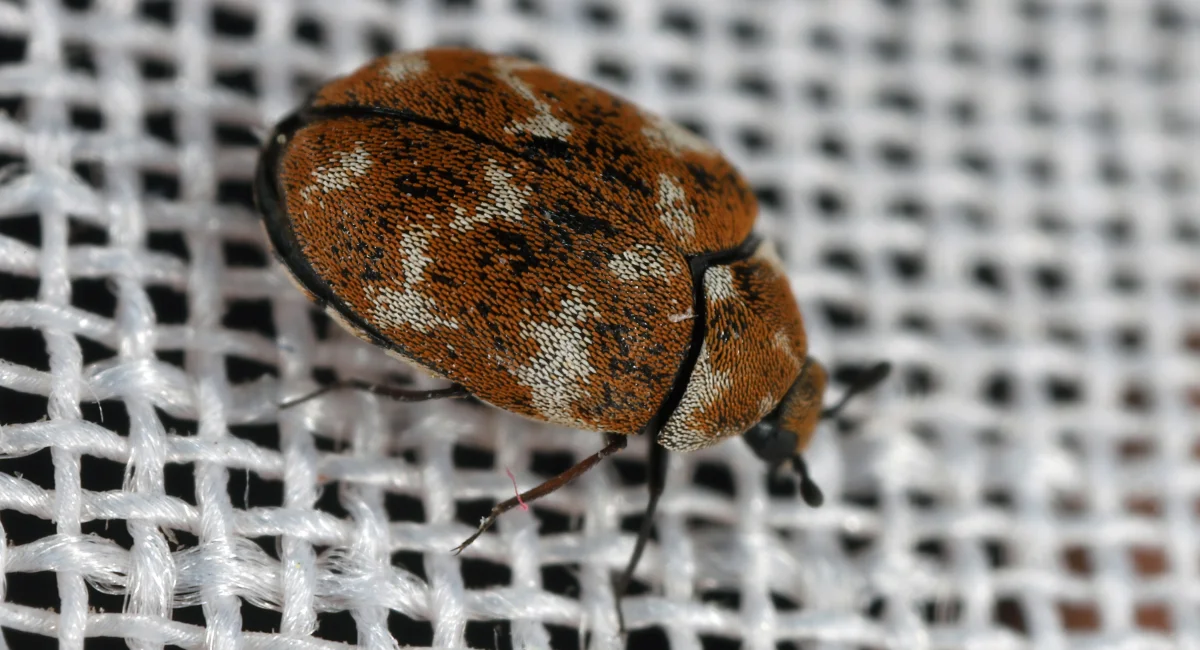
Carpet Beetle Shells Compared to Bed Bug Shells
Shed skins serve as an important visual clue for differentiation. As carpet beetle larvae grow, they molt and leave behind small, fuzzy, or bristly shells near damaged fabrics or carpets. These shells are easy to miss but can accumulate over time in undisturbed areas.
Bed bug shells are smoother and closely resemble the bug's shape. You usually find them near mattresses, bed frames, and in the seams of furniture. When checking for signs of either pest, the texture and location of the shed skins can help you determine which pest you're dealing with:
- Carpet beetle shells: Fuzzy, bristly, found near fabrics, carpets, and storage areas
- Bed bug shells: Smooth, translucent, found near mattresses, bed frames, and furniture seams
Signs You May Have Carpet Beetles or Bed Bugs
Knowing the warning signs can help you determine whether you have bed bugs or carpet beetles before the problem escalates. Each pest leaves distinct indicators.
Signs of Carpet Beetles
Signs of carpet beetles can be hard to spot at first, so infestations often go unnoticed until the damage is visible.
- Irregular holes in natural-fiber items: Found in wool clothing, carpets, rugs, upholstered furniture, or blankets. Unlike moth damage, these holes typically appear at random, not along seams.
- Presence of larvae: You might see small, slow-moving larvae, often covered in fine hairs, crawling on floors, walls, or baseboards. They are typically found near windows, closets, air vents, and areas where lint, pet hair, or dust collects.
- Shed larval skins: These resemble tiny, hollow, fuzzy shells and tend to accumulate in hidden or undisturbed areas, such as drawers, under furniture, or along the edges of carpets.
- Adult beetles: Small, oval-shaped insects may be spotted near windows, light fixtures, or lamps, as they are attracted to light.
Because carpet beetles feed quietly and reproduce gradually, infestations can build up, making early detection challenging without close inspection.
Signs of Bed Bugs
Bed bugs are nocturnal, hiding under mattresses, behind loose wallpaper, or in furniture seams, and emerging at night to feed. Once an infestation begins, it spreads rapidly as bugs travel through wall voids, vents, and utility chases, or attach themselves to laundry baskets, suitcases, furniture, and clothing.
In the tri-state area, dense housing, frequent travel, and shared walls in apartment buildings make it easier for bed bugs to move between units and properties, allowing infestations to spread quickly. Educational facilities, hotels, and healthcare environments face particular risk due to high occupant turnover.
They use an elongated mouthpart to pierce the skin and draw blood, similar to a mosquito. These bites often result in red, itchy welts and are frequently the first visible sign of an infestation. Other key indicators to watch for include:
- Bites: Red, itchy welts are usually the first sign of bed bugs.
- Blood stains on sheets or pillowcases: Small blood stains can indicate that bed bugs have been feeding.
- Rust colored stains on the bed and furniture: These are typically bed bug fecal matter and can be found on mattresses, bedding, and furniture.
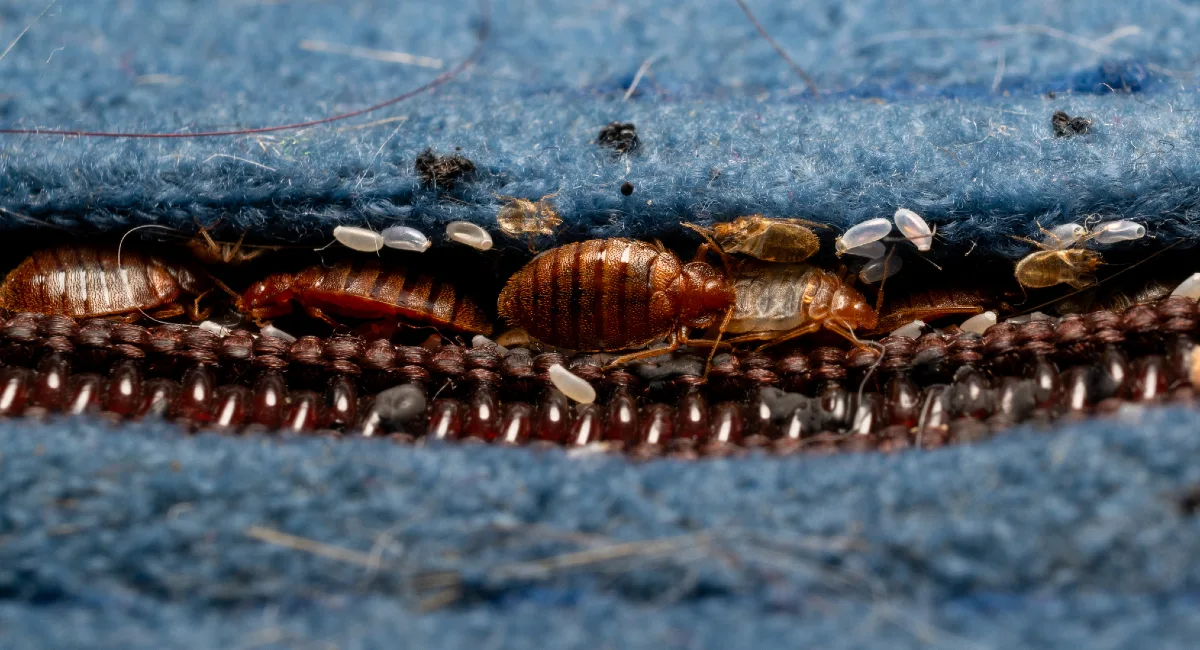
- Egg casings: Tiny, white, oval-shaped egg casings, often found in crevices and cracks, are a clear sign of bed bug reproduction.
- Skin sheds: As bed bugs grow, they shed their exoskeletons, leaving behind translucent, empty shells that resemble the shape of the bug.
Preventing Carpet Beetles and Bed Bugs
Both pests often enter offices, motels, hospitals, and apartment buildings on fabrics, packaging, or furniture. Returning travelers are advised to wash clothing and avoid placing unpacked items onto bedding or other soft furnishings, in case bed bugs or carpet beetles have hitched a ride. Secondhand furniture can also harbor unwelcome pests.
There are several ways to reduce risk, prevent negative reviews, maintain customer confidence, and avoid temporary closures caused by infestations:
- Check all secondhand furniture and textiles carefully before bringing them into your business. Keep these items in a separate area for at least 48 hours to watch for any signs of pests.
- Seal cracks and gaps in your walls and around windows to keep pests out.
- Clean and vacuum often, paying extra attention to storage areas, behind furniture, and other areas not used much, as pests can hide there.
- Store clothing and linens in airtight bags. This keeps pests away from fabrics and helps stop any infestations from spreading.
- Set up pest monitoring in high-risk areas, including kitchens, storage rooms, loading docks, and guest areas. Use traps and check these spots regularly.
- Use natural deterrents such as food-grade diatomaceous earth around baseboards and entryways. Place cedar blocks or chips in storage areas to help keep pests away.
- Check all deliveries and shipments for signs of pests before bringing them into your business. Many infestations start through supply chains.
Preventive maintenance, including regular inspections, is more cost-effective than post-infestation treatment, particularly in commercial spaces where pests can impact customer satisfaction or violate compliance regulations.

Do Carpet Beetles and Bed Bugs Require Different Treatments?
Carpet beetles and bed bugs do require different treatments to control and manage populations.
Treating bed bugs is more complicated and typically requires professional assistance. Getting rid of them often involves heat treatments, specialized insecticides, and meticulous inspections to catch them at every stage. DIY methods are often ineffective against bed bugs and can cause infestations to spread to adjacent rooms or units.
Knowing the differences between carpet beetles and bed bugs helps you act fast. If you're unsure which pest you have, a professional inspection from Assured Environments can confirm the species and provide the correct treatment plan. Addressing the problem early protects your home, your tenants, and your reputation.
Professional Bed Bug and Carpet Beetle Control in New York Tri-State
Assured Environments provides expert commercial pest solutions for carpet beetle or bed bug and other facility pests across New York, New Jersey, and Connecticut. Utilizing targeted regular bed bug control programs and highly accurate K9 bed bug detection teams, we pinpoint hidden harborages early to keep your operations compliant and bug-free. From offices and hotels to schools and warehouses, we deliver a professional, comprehensive service designed for minimal disruption to your business. From offices and hotels to schools and warehouses, we deliver a professional, comprehensive service with minimal disruption to your business.
Our pest management plans are fully scalable and supported by experienced, licensed technicians who understand the unique challenges of managing pests in commercial environments.
Explore our related services:
- Carpet Beetles Identification Guide
- Where do carpet beetles come from?
- Bed bug removal service
- Commercial Pest Solutions
Bed Bug and Carpet Beetle Frequently Asked Questions
Carpet beetles do not nest in mattresses or bedding like bed bugs. While they may end up on beds, they prefer to hide in carpets, baseboards, and storage areas where they can feed on natural fibers. Bed bugs, in contrast, seek out sleeping areas because they feed on blood while people rest.
Carpet beetles do not bite. However, some people may develop red, itchy bumps that look like bites due to allergic reactions to the tiny hairs on carpet beetle larvae. These hairs can irritate the skin, especially in individuals with allergies or preexisting skin conditions like eczema.
Bed bugs reproduce and spread much faster than carpet beetles. Bed bugs lay eggs frequently and can move from room to room through walls, vents, and fabric items. Carpet beetles reproduce more slowly and tend to stay near their food sources unless disturbed or relocated on infested items.
Yes. Adult carpet beetles have wings and can fly. They are often attracted to light and may be seen near windows, lights, or doorways. This behavior distinguishes them from bed bugs, which cannot fly and rely on crawling to move between areas.
Yes, but not in the same way. Carpet beetle larvae have tiny bristle-like hairs that can cause allergic skin reactions in vulnerable individuals with pre-existing skin conditions. These rashes often appear as clusters of small, red welts, typically in areas where the larvae or their hairs have come into contact with skin.
Commercial pest control for bed bugs
Expert solutions to eliminate and prevent bed bug infestations in your business.
- Our technicians use proven methods like heat treatments and K9 detection for effective bed bug removal
- We offer proactive solutions to prevent future infestations, protecting your business from recurring issues
- Fast, professional service from local experts to protect your reputation and maintain a pest-free environment