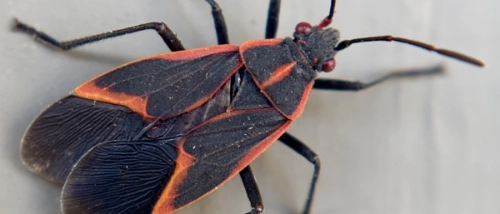
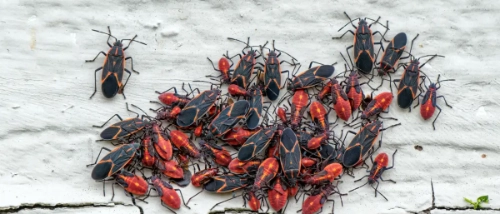
Habitat, Diet, Life Cycle, and Behaviors
Closely associated with seed-bearing trees, boxelder bugs follow a predictable seasonal migration, moving from outdoor host trees in spring and summer into the warmth of buildings each fall. Understanding their habits helps explain why infestations tend to appear suddenly and in large numbers.
Where Do Boxelder Bugs Live?
In warmer months, boxelder bugs live outdoors near boxelder, maple, and ash trees. As temperatures fall, they migrate toward sun-warmed building surfaces and move inside through any available crack or gap to spend the winter in a dormant state.
What Do Boxelder Bugs Eat?
Boxelder bugs feed primarily on the seeds of maple trees (including boxelder trees), although they also consume the sap of maple, ash, and stone fruits, as well as ripe fruit. Adults and nymphs feed with piercing-sucking mouthparts, but since they mainly feed on seeds rather than plant tissue, they rarely cause serious or lasting damage to the trees they inhabit.
Boxelder Bug Life Cycle
Adults mate in early summer and lay eggs on host trees in July. Eggs hatch within 10 to 14 days, and nymphs feed continuously through summer, shedding their skin in stages, called instars, before reaching adulthood in fall. Adults overwinter in sheltered structures and emerge again the following April or May to mate.
Boxelder Bug Behaviors
These bugs are gregarious and gather in large groups on south and west-facing walls and windows to absorb warmth. When crushed or threatened, they release a toxic, unpleasant-smelling liquid. Fully grown adults can fly, but they typically crawl from place to place.