© 2026 Ramac US, LLC © Copyright Assured Environments. All Rights Reserved
Protecting landmarked and premium real estate from bird damage is an uphill struggle throughout New York, New Jersey, and Connecticut. Heritage buildings with ornate cornices, hand-carved detailing, and Class-A curtain walls offer prime roosting spots for pigeons, starlings, and sparrows, while conventional deterrents can look unsightly and out of place.
For property managers overseeing historic and premium assets in Manhattan, Westchester, Greenwich, and New Haven, this creates a dilemma. You need effective commercial bird control and deterrents to limit liability and maintenance, but must also navigate strict legal and aesthetic requirements. Fortunately, the two are no longer mutually exclusive; modern solutions allow you to protect the building and preserve its character.
Why Prestige Façades Attract More Bird Activity
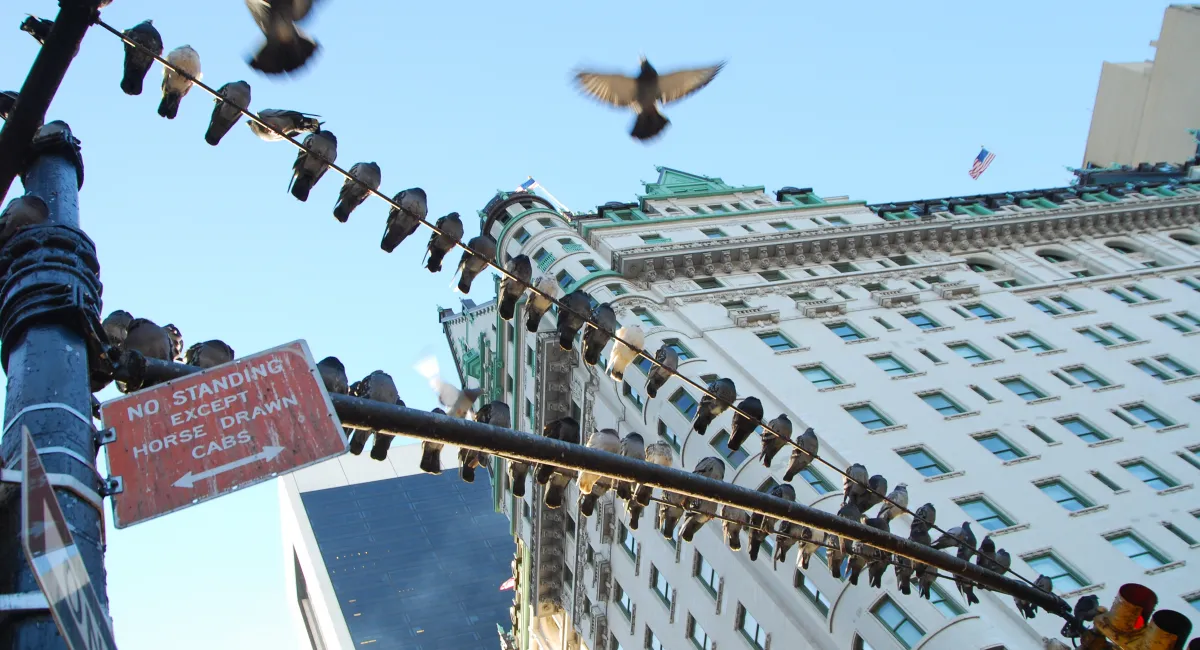
The features that make a building attractive frequently also appeal to birds. Deep ledges, projecting cornices, and stepped setbacks on older masonry provide sheltered roosting places. On modern Class-A towers, wind-shielded window ledges, signage, and mechanical recesses do much the same. The more intricate the façade, the more shelter a building offers, which is why heritage and premium real estate can see more bird activity than their understated neighbors.
Once birds establish a roost, they keep returning, and droppings accumulate on the surfaces below—cornices, entrances, and window ledges that are both highly visible and costly to clean at height. The associated risk calls for a measured, well-rounded approach by maintenance teams to prevent droppings, deterioration, or slip hazards from becoming health and safety issues that affect tenant satisfaction.
The Drawback of the Obvious Fix
When bird activity becomes noticeable, installing a visible deterrent is the obvious solution. However, on a premium or landmarked building, that can create problems of its own.
Standard installations such as bulky spikes or coarse netting can conflict with NYC Landmarks Preservation Commission guidelines and state heritage board requirements. Moreover, these visible installations can diminish a property’s curb appeal. As tenants and investors often view the building’s exterior as a proxy for management quality, a deterrent that protects the masonry but compromises the streetscape is not an ideal solution.
There's also the risk of paying for the same work twice. Deterrents that fail to meet landmark requirements or are poorly specified often face rejection, resulting in removal and reinstallation. This not only results in avoidable project delays but also incurs unnecessary additional costs.
Discreet By Design: Solutions That Stay Out of Sight
Modern bird exclusion can be both effective and visually low-key. On detailed façades, the aim is defense that blends in with the architecture rather than working against it. Options well-suited to premium and heritage buildings include:
- Low-profile bird wire — a tensioned post-and-wire system that sits largely out of sight along ledges, sills, and cornices, removing a stable landing surface without changing the visible line of the stonework.
- Discreet electrified track — a thin, low-visibility shock track that traces architectural detailing and encourages birds to avoid treated ledges, useful where appearance matters.
- Color-matched, tensioned netting — difficult to see when installed well. Bird netting is suited to recesses, courtyards, light wells, and setbacks where full exclusion is needed.
What links these options is intent: each system is selected to balance risk reduction with visual impact, rather than being applied generically. Assured's approach to bird exclusion and nesting prevention matches the method to the surface, the species, and the building's visual standard.
Compliance and Heritage Approval in the Tri-State
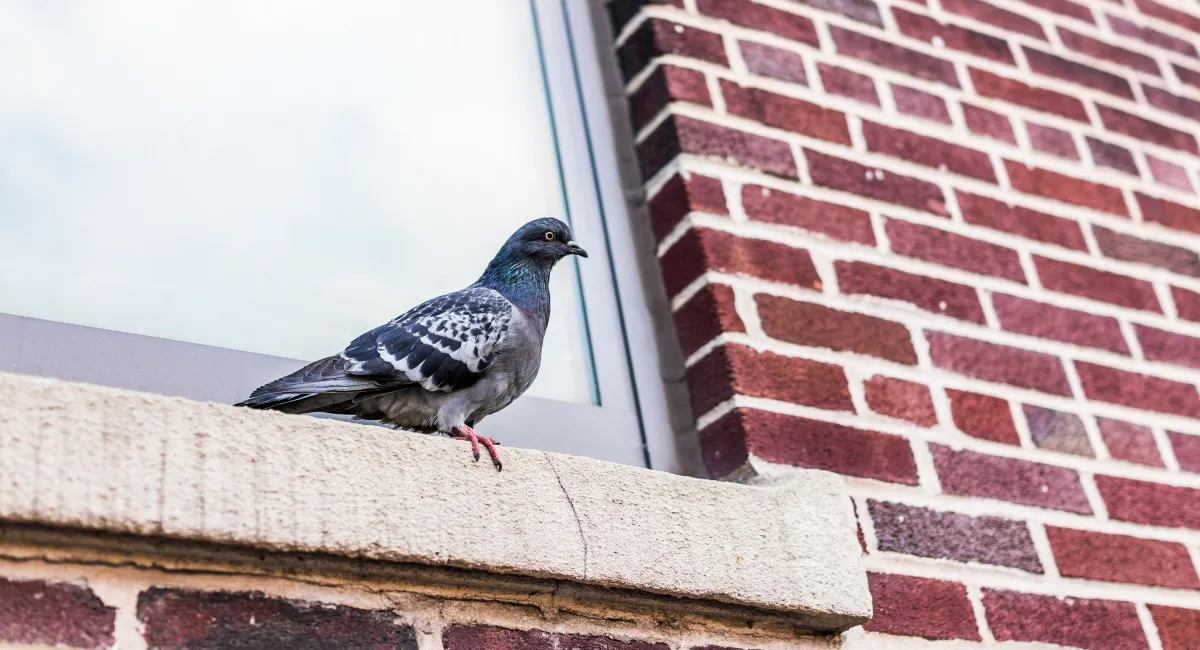
Uric acid in droppings can contribute to the deterioration of masonry, metalwork, and sealants, which are conditions reviewed during inspections, such as the mandatory NYC Façade Safety and Inspection Program (FSIP) for taller buildings. Since the program mandates a full assessment every five years for buildings over six stories, allowing droppings to erode surfaces can escalate a preventable maintenance task into a reportable defect.
Any bird deterrent for landmarked buildings is also subject to heritage approval, thereby adding yet more red tape and possible restrictions.
Understated, architecturally sympathetic systems have a dual benefit. They mitigate the droppings flagged by inspections, while their unobtrusive design streamlines the approval process. In a market defined by density and regulatory activity, this balance is a powerful operational tool.
Getting the Specification Right the First Time
For complex, high-visibility façades, a survey-led approach can save you time and money. Bird protection is more effective and compliant when deterrents are purpose-built for the building’s architecture, avoiding the limitations of standard, generic systems.
A survey identifies high-risk features and roosting patterns, and accounts for the species involved; the pressure from pigeons differs from that of starlings or sparrows, and the right response varies accordingly. It also considers material sensitivities, as fixing methods suitable for modern curtain walls may not be suitable for aged masonry or protected stonework. This ensures that bird defense measures complement your ongoing maintenance, cleaning, and inspection schedules.
Long-guarantee systems minimize the need for recurring repairs, providing a cost-effective, long-term solution that integrates easily into your existing commercial property management pest program.
The Professional Approach
If you manage a landmarked or Class-A building in the tri-state area, it's worth asking whether your approach keeps the building both compliant and visually intact. Planning ahead is far more efficient than reacting once staining, tenant complaints, or inspection findings force your hand.
Our team is happy to talk through our façade-sensitive approach, perform an on-site assessment, and suggest options suited to your site, building age, and state guidelines.
Whether you manage a single landmark or a wider portfolio, our specialists can assess your façade and recommend deterrents that balance protection with visual discretion. Reach out to begin the conversation.
Book Your Free Pest Inspection Today
Our local technicians will assess your property and recommend tailored solutions. Fast, friendly, and completely obligation-free.
- Safe, targeted treatments
- Local experts, fast response
- Trusted, trained technicians