What are Spotted Lanternflies
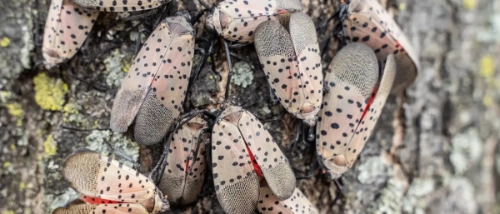
Spotted lanternflies (Lycorma delicatula) are an invasive planthopper native to parts of China, India, and Vietnam. Despite the name, they are surprisingly poor fliers, relying on short bursts of flight and powerful hopping to move around. Adults are around an inch long with grey forewings dotted in black, and bright red underwings that flash when they take off, making them unmistakable once you've seen one.
So why are spotted lanternflies bad? They feed by piercing plants and trees, sucking sap, weakening their hosts, and excreting large volumes of a sugary substance called honeydew. That honeydew coats everything beneath it, from plants and hardscaping to vehicles and outdoor seating. This quickly develops a black sooty mold that's difficult to remove and damaging to the surfaces it grows on.
For tri-state businesses with outdoor areas, ornamental trees, vineyards, orchards, or landscaped grounds, that combination of feeding damage, honeydew, and sheer numbers is what turns a sighting into a problem. In New York, spotted lanternfly sightings are now confirmed across all five boroughs, Long Island, and the lower Hudson Valley, with active and growing populations across New Jersey and Connecticut.