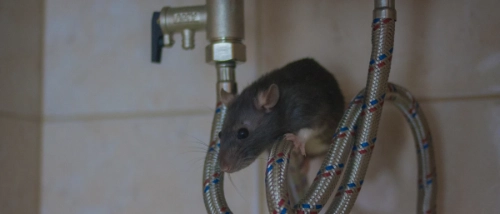
Habitat, Diet, Life Cycle, and Behaviors
No matter which mouse species you’re dealing with, understanding where they live, what they eat, and how they reproduce is essential to putting a proper control plan in place.
Where Do Black Mice Live?
Wall voids, behind kitchen equipment, inside storage racking, and beneath raised flooring are all common nesting spots. Darker-coated deer mouse variants may enter buildings from surrounding green spaces, while house mice tend to establish permanent, year-round indoor colonies once a viable entry point has been found.
What Do Black Mice Eat?
In food businesses, dry goods storage and preparation areas are at the highest risk of contamination. Feeding occurs in short, frequent visits across multiple sites in a single night, so the spread of contamination often covers a much larger area than the mouse population size might initially suggest.
Black Mouse Lifecycle
Female black mice reach reproductive maturity at around six weeks old and can deliver multiple litters throughout the year, with between four and eight pups per litter. Gestation lasts roughly 19 to 21 days. Populations that establish themselves inside a building breed continuously, without the seasonal pressures that slow outdoor species, meaning a small number of mice can develop into a significant infestation within just a few months.
Black Mouse Behaviors
Black mice exhibit the same behavioral patterns as other mice of their species, running close to walls along fixed routes and leaving greasy smear marks as evidence of regular movement. They're active mostly after dark but will venture out during daylight hours when populations are high. Curious by nature, they tend to investigate new objects in their environment fairly quickly, which can make them slightly more responsive to trap placement than rats typically are.