800-942-7123 Call Now Book a Free Inspection

Rats can’t be underestimated. They are an incredibly destructive, high-risk pest in commercial environments, causing structural damage, contaminating food supplies, and triggering costly health code failures. This page covers rat habitat, diet, life cycle, and the serious dangers they pose to businesses.

Quick Facts About Rats

  • NYC rats are among the most well-established urban pest populations in the country, with an estimated rat-to-person ratio that surprises most people.
  • New York rat sizes vary by species, but Norway rats can reach 16 inches in length, including their tail, making them hard to mistake.
  • Rats need to gnaw constantly to manage their incisor growth, making gnawed plastic and conduit damage a routine consequence of any infestation.
  • A single rat can produce up to 40 droppings per day, meaning rat poop accumulates fast in active harborage areas.
  • Rat burrow systems beneath building foundations can undermine concrete slabs and compromise structural integrity over time.
  • Rats are highly suspicious of new objects in familiar environments, a trait known as neophobia that makes attempts at amateur control largely ineffective.
     

Common Types of Rats in New York & the Tri-State Area

Norway Rats (Sewer Rats)

The Norway rat, or sewer rat, is the dominant rat species in New York and surrounding urban areas. They are heavy-bodied, ground-dwelling burrowers that enter buildings through sewer line ingress, foundation gaps, and utility penetrations at or below ground level.

Roof Rats (Black Rats)

Roof rats are sleeker and lighter than Norway rats, with larger ears and longer tails relative to their body. They're strong climbers that access buildings through rooflines, overhanging branches, and elevated pipe runs, making upper-floor and attic infestations their calling card.

Seeing Rats?

Contact us today for your free inspection.

Habitat, Diet, Life Cycle, and Behaviors

Understanding how rats live and move through a property is essential to controlling them effectively. Here's what businesses need to know before putting any program into action.

Where Do Rats Live?

Norway rats burrow beneath slabs, along foundations, and under landscaping. Roof rats favor elevated spaces, including ceiling voids, roof structures, and wall cavities. Both species follow established rat run pathways and rarely stray far from known food and water sources.

What Do Rats Eat?

Rats are true omnivores. They eat pretty much anything, including grains, meat, grease, garbage, and even soap. On commercial sites, unsecured waste, uncovered food storage, and poorly maintained dumpster areas are the primary food attractants that drive and sustain infestations.

Rat Life Cycles

Rats reach sexual maturity between five and 12 weeks and produce four to six litters per year, with up to twelve pups per litter. Populations grow rapidly when food and shelter are available, which is why a small early-stage problem can become a serious infestation within a single season without professional intervention.

Rat Behaviors

Rats are cautious and creatures of habit. They travel the same rat run pathways repeatedly, typically along walls, pipes, and fence lines, which is why rat poop, grease smears, and worn tracks appear in predictable locations. Neophobia means rats often avoid new objects placed in familiar routes for days before investigating.

Rat Seasonality

Rat pressure on commercial buildings increases in late fall as outdoor temperatures drop and food sources become scarcer. How to get rid of rats outside before they drive indoors is a key part of any fall pest management strategy. That said, NYC rats in urban environments with consistent food access can remain active and breed throughout the year, including winter.
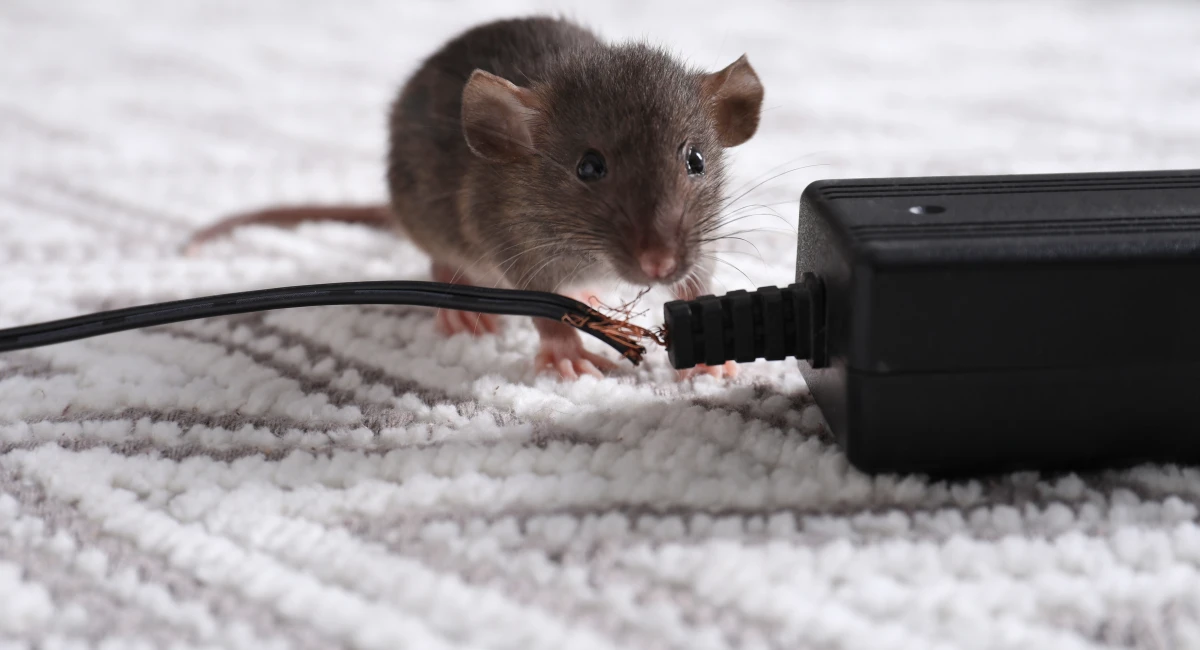
Rat with gnawed electrical wire

Signs of a Rat Problem

Knowing what to look for is half the battle. Rat activity leaves reliable physical evidence that trained staff can spot during routine walkthroughs, long before the animals themselves are seen.

Rat Poop and Dropping Identification

What does rat poop look like? Norway rat droppings are large, capsule-shaped droppings roughly the size of a raisin, with blunt ends. Roof rat droppings are slightly smaller and more tapered. Fresh rat poop is dark, moist, and soft. Older droppings are dry, gray, and brittle. Finding droppings in food areas, along walls, or near entry points is a serious red flag that warrants immediate professional assessment.

Rat Nests, Grease Rub Marks and Burrowing Signs

Rat nests, or burrows, are built from shredded insulation, paper, fabric, and other soft materials. Look for dark grease smears left along rat run pathways at wall level, which build up where rats repeatedly brush against surfaces. Outside, active rat burrow systems appear as smooth-edged holes roughly two to three inches in diameter in soil, mulch, or beneath slabs.

How to Get Rid of Rats

The type of property and the species of rat will have an impact on the choice of elimination method. Targeting the nest is the most effective way to deal with a rat infestation, and we have a wide range of methods to do just that, including our combination of carbon monoxide burrow treatment and Flexi-Armour barriers.

Commercial Impact and Industry Risks

For commercial properties, rats create risks to safety, compliance, and operations. The damage they cause inside walls, under floors, and within service areas often goes unnoticed until the consequences are severe and expensive to address.

Electrical Wiring Damage, Fires and Structural Undermining

Gnawed plastic and conduit are among the most common and dangerous consequences of a rat infestation in a commercial building. Rats chew through electrical cable insulation, data lines, and gas pipework to grind down their constantly growing teeth. This creates short-circuit and fire risks that are often attributed to aging infrastructure rather than pest activity. Simultaneously, active rat burrow systems beneath foundations and concrete slabs can undermine structural integrity over time, particularly in older commercial buildings.

Health Code Violations, Contamination and Audit Failures

A single piece of rat evidence found during an inspection can result in an immediate critical violation. Rat poop, urine contamination, gnawed plastic and conduit on food packaging, and live rat sightings are all grounds for closure in food service and hospitality settings.
 

Frequently Asked Questions

Sewer line ingress is one of the most common and hardest-to-diagnose entry routes for Norway rats in urban commercial properties. If rats are accessing your building through drainage infrastructure, standard proofing alone won't solve the problem. Assured Environments can assess sewer entry points, recommend drain pipe covers, and one-way exclusion valves.

Yes, when installed and maintained correctly. Exterior baiting perimeter programs use tamper-resistant bait stations that are secured, labeled, and positioned away from public access points. All products used by Assured Environments are EPA-registered and applied in line with label requirements. Station locations, bait types, and inspection intervals are all documented as part of your service records, which also supports your compliance position during health audits.

Most inspectors expect to see a documented pest management program that includes dated service reports, bait station maps, evidence of pest activity recorded over time, and corrective actions taken in response to findings. This paper trail demonstrates that your business is proactively managing urban vector control obligations rather than reacting only when a problem becomes visible. Assured Environments provides full service documentation as standard with every commercial rat control program.

Staff play a critical role in keeping rats out. Dumpster pad sanitation should be part of the daily closing routine, with lids kept shut and any spillage promptly cleared. Trash compactor seals should be inspected regularly for gaps or damage. Deliveries should be checked for signs of gnawing or rat poop before goods are brought into the building, and any new holes or gaps in exterior walls, floors, or service areas should be reported immediately rather than left for the next scheduled pest visit.

Dumpster pad sanitation is one of the most impactful steps a commercial property can take to reduce rat pressure. Keep dumpster lids fully closed at all times, repair damaged trash compactor seals promptly, and hose down the surrounding pad regularly to remove food residue and odor. Position dumpsters as far from building entry points as operationally possible, and consider installing metal skirts or concrete aprons around the bases to prevent burrowing directly beneath them. An exterior baiting perimeter around waste storage areas is also a highly effective layer of protection for sites with persistent pressure.

Find Your Local Branch

Go

Get in Touch

Contact Assured Environments now to arrange a free risk assessment and explore tailored solutions for your commercial site.

About Us

Learn about Assured Environments, the best commercial pest control for New York and the surrounding area. Get Assured Environments pest control services today.