800-942-7123 Call Now Book a Free Inspection

Common Bird Species in NY, NJ & CT

From city parks to coastal wetlands, the tri-state area offers a rich mix of habitats that attract hundreds of bird species each year. Whether you're a seasoned birder or just starting out, understanding the region's avian diversity is key to appreciating and protecting its wildlife. This guide introduces notable bird species in New York, New Jersey bird species, and bird species in Connecticut, including residents, migrants, and invasive species.

Tri-State Regional Overview

Each region in the tri-state area plays host to a variety of habitats. New York’s Adirondacks and Long Island Sound, New Jersey’s Pine Barrens and coastal marshes, and Connecticut’s woodlands and estuaries provide unique conditions supporting diverse bird populations. Some species stay year-round, while others pass through during migration.

Urban green spaces such as Central Park in New York City or Liberty State Park in Jersey City serve as crucial stopovers for migratory species. Meanwhile, coastal reserves like the Edwin B. Forsythe National Wildlife Refuge in New Jersey and the Stewart B. McKinney National Wildlife Refuge in Connecticut offer feeding and nesting grounds for seabirds and shorebirds, and forest preserves and river valleys are perfect breeding habitats for songbirds, raptors, and woodpeckers. Species diversity within these areas is particularly high during spring and fall migration.

Conservation groups protect or monitor many of these areas, making them ideal locations for birdwatching, education, and ecological research. Furthermore, public engagement programs and citizen science initiatives have grown in popularity, helping to track seasonal shifts and protect sensitive species. 
Common Year-Round Species

These birds can be spotted year-round in urban and rural areas. They congregate in residential locations, city parks, woodlands, and farmlands. Their distinctive traits make them excellent subjects for beginner birdwatchers and educational programs.

Northern Cardinal (Cardinalis cardinalis)

Easily recognized by its bright red color and melodic song, the cardinal is a favorite at backyard feeders and thrives in both wooded and suburban settings.

Blue Jay (Cyanocitta cristata)

Known for its bold personality and striking blue plumage, the blue jay is a frequent visitor in gardens and woodlands, often heard before it’s seen.

American Crow (Corvus brachyrhynchos)

Intelligent and social, crows adapt well to human environments and are often seen scavenging in open fields and urban areas.

Mourning Dove (Zenaida macroura)

This slender, soft-colored bird is known for its gentle cooing and quick, whistling flight. It often nests on building ledges and tree branches.

House Sparrow (Passer domesticus)

Introduced from Europe, house sparrows are commonly found near human dwellings, feeding on crumbs, seeds, and grains.

European Starling (Sturnus vulgaris)

Another non-native species, starlings are highly social and often seen in large flocks, particularly around urban centers and farmlands.

Red-tailed Hawk (Buteo jamaicensis)

A common sight along highways and in open country, this large raptor is identified by its reddish tail and piercing cry.

Seasonal and Migratory Species

Spring and fall bring dramatic shifts in bird populations, especially along coastal flyways. These seasonal migrations transform parks, forests, and wetlands into hotspots for rare and colorful species not seen during the rest of the year. Birds such as:

  • Baltimore Oriole (Icterus galbula): Recognizable by its vivid orange-and-black coloring, often found in deciduous trees during spring.

  • Rose-breasted Grosbeak (Pheucticus ludovicianus): A striking songbird with a bold black-and-white pattern and a vivid rose-colored chest.

  • Yellow-rumped Warbler (Setophaga coronata): One of the earliest returning warblers in spring, easily identified by its yellow patches.

  • Scarlet Tanager (Piranga olivacea): Males are bright red with black wings; females are olive-yellow. Often seen in mature forests.

  • Snow Goose (Anser caerulescens): Travels in large, noisy flocks that are most visible during fall and spring migration.

  • Red-throated Loon (Gavia stellata): A coastal visitor with a streamlined body and unique call, more often seen offshore.

Due to rich marine habitats, seabird migration is especially active in the coastal areas of Connecticut and northern New Jersey. Inland, the Appalachian flyway channels species like thrushes, warblers, and raptors through the Hudson Valley and central Connecticut. Migration timing varies by species, but many peak in late April to early May and again in September to October. For birdwatchers, these periods offer the best opportunities to spot a wide variety of bird species in a single outing.

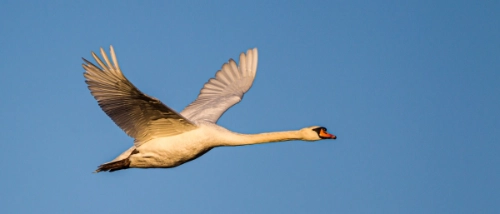
The mute swan is one of several invasive bird species in the U.S.

Invasive Species and Environmental Impact

Several invasive bird species in New York and across the region compete with native birds for food, space, and nesting sites. Common examples include:

  • European Starling (Sturnus vulgaris): Introduced from Europe, starlings aggressively take over nesting cavities used by native species like woodpeckers and bluebirds.
  • House Sparrow (Passer domesticus): Also a European import, house sparrows crowd out native birds from feeders and nest boxes, particularly in urban and suburban settings.
  • Mute Swan (Cygnus olor): These large, ornamental swans were introduced for aesthetic purposes and are now common in ponds and lakes, where they displace native waterfowl and destroy aquatic vegetation.

These birds were introduced to the U.S. in the 19th and 20th centuries. They are now widespread and can displace native species, damage crops, and alter local ecosystems. Conservationists often monitor their populations closely to assess long-term ecological impacts.

Legal Protections for Birds

Many bird species in New York, Connecticut, and New Jersey are protected under the Migratory Bird Treaty Act. This federal law prohibits the disturbance, capture, or killing of listed species, as well as the removal of active nests. Violations can result in significant penalties, including fines.

State-level laws further protect threatened or endangered species locally. For example, New York’s Environmental Conservation Law and New Jersey’s Endangered and Nongame Species Conservation Act offer enhanced protection for species at risk. These regulations safeguard birds and the habitats they rely on for nesting, feeding, and shelter.

Whether you’re an educator, birder, or property manager, it’s essential to understand these protections before attempting any form of intervention or removal. Conservation efforts depend on public awareness, accurate reporting, and responsible behavior in the field.

Supporting Bird Protection with Assured Environments

While many birds are harmless or beneficial, their presence in commercial or high-traffic areas, such as schools, healthcare facilities, or office buildings, sometimes requires intervention. At Assured Environments, we’re committed to protecting bird life while helping our clients maintain safe and compliant spaces.

Our licensed technicians are trained to provide humane bird control services that comply with federal and state wildlife laws. Whether you’re managing a persistent bird infestation, responding to nesting near HVAC units, or planning seasonal maintenance, we’ll work with you to ensure minimal disruption to native species.

From discreet deterrents to nest assessments, our solutions are built to support property safety and local biodiversity. Partnering with us means protecting your space, without putting birds at risk.

If you're having trouble with birds, contact us today for bird control advice or to schedule a free inspection.

Frequently Asked Questions

Northern Cardinals, Blue Jays, Mourning Doves, House Sparrows, and American Crows are seen year-round in most parts of the state. These birds are easy to spot in urban parks and rural landscapes, making them ideal for beginner birdwatchers.

Common year-round New Jersey bird species include the Red-tailed Hawk, Black-capped Chickadee, American Robin, and Downy Woodpecker. These birds adapt well to changing seasons and can be found in backyards, forests, and coastal areas.

Many warblers, orioles, and waterfowl pass through Connecticut during spring and fall, including Yellow-rumped Warblers, Snow Geese, and Red-throated Loons. During these peak migration periods, birdwatchers often flock to coastal reserves and wooded trails.

Use binoculars and a field guide or app to note color, size, shape, and sound. Joining a local birding group or participating in community science apps like Merlin and eBird can help refine your skills and contribute to broader conservation efforts.

Most native birds in these states are federally protected under the Migratory Bird Treaty Act. Some species may also appear on state-specific threatened or endangered lists, with additional protections for their habitats and nesting sites.

Yes, invasive bird species in New York include House Sparrows, European Starlings, and Mute Swans. These birds can outcompete native species for nesting sites and food, potentially altering local ecosystems.


Ready to Get Started?

Contact us today for a free, no-obligation quote!

800-942-7123


Find Your Local Branch

Go

Get in Touch

Contact Assured Environments now to arrange a free risk assessment and explore tailored solutions for your commercial site.

About Us

Learn about Assured Environments, the best commercial pest control for New York and the surrounding area. Get Assured Environments pest control services today.