800-942-7123 Call Now Book a Free Inspection

Businesses of every sort face problems from birds, ranging from structural damage and health risks to compliance failures and liability. This page covers what you need to know about pest birds, including their habitat, diet, life cycle, and the dangers they pose to commercial operations.

Quick Facts About Pest Birds

  • Bird droppings are acidic and can damage roofing materials, paintwork, and HVAC equipment within months.
  • Several common pest species are protected under the Migratory Bird Treaty Act, making DIY removal a potential legal issue.
  • A single pair of pigeons can produce up to six broods per year, so infestations grow fast without intervention.
  • Bird droppings carry over 60 transmissible diseases, including histoplasmosis, salmonella, and E. coli, making cleanup a serious health concern.
  • Nesting debris in gutters and on rooftops is one of the most common causes of water damage in commercial buildings.
     

Common Types of Birds in the Tri-State Area

Starlings

How to get rid of starlings is a common concern for facility managers. Starlings roost in enormous flocks, create significant noise and mess, and their droppings can quickly overwhelm gutters, loading areas, and rooftop equipment.

Swallows

Swallows are migratory and mud-nest builders that target building eaves and overhangs. Getting rid of swallows requires early intervention before nests are built, as active nests with eggs or chicks are federally protected under the Migratory Bird Treaty Act.

Vultures

Vultures are increasingly an issue for commercial and industrial properties, particularly in rural and semi-rural areas. Removing vultures typically involves a combination of visual deterrents and habitat modification, as lethal control is strictly prohibited.

Pigeons

Pigeons are the most common urban pest bird. How to get rid of pigeons is one of the top pest control questions from commercial property owners, and with good reason. Their droppings are prolific, acidic, and a significant slip, health, and structural risk.

Sparrows

House sparrows nest aggressively inside warehouses, retail units, and food production facilities. Getting rid of sparrows indoors usually requires a combination of commercial bird netting, trapping, and nesting site exclusion to achieve lasting results.

Crows

Crows are highly intelligent and difficult to deter once they've established a territory. Crow removal from commercial premises typically requires a layered approach using visual and acoustic scare deterrents alongside physical exclusion methods to break their habituation.

Problem With Birds?

Contact us today for your free inspection.

Habitat, Diet, Life Cycle, and Behaviors

Bird behavior varies considerably between species, so what works against pigeons won't necessarily work against starlings or swallows. Here's a general overview to help frame the problem.

Where Do Pest Birds Live?

Pest birds gravitate toward man-made structures for shelter and nesting. Roosting ledges and awnings, rooftops, signage, bridge underpasses, and loading docks are all prime real estate for urban pest species year-round.

What Do Birds Eat?

Diet varies by species, but most pest birds are opportunistic feeders. Pigeons and sparrows scavenge food waste, while starlings and crows will eat almost anything. Easy access to food on commercial sites is a major attractant.

Pest Bird Lifecycles

Most pest bird species breed one to several times per year. Pigeons can breed year-round in mild climates. Eggs hatch in two to three weeks, and juveniles typically reach independence within a month, accelerating population growth on infested sites.

Bird Behaviors

Pest birds are creatures of habit. Once a flock establishes a roosting or nesting site, they'll return to it repeatedly. This behavior is exactly why reactive cleaning without proper bird proofing never solves the underlying problem.

Pest Bird Seasonality

Spring and summer are peak nesting seasons for most species, but many pest birds, especially pigeons, are active year-round. Migratory species like swallows arrive in spring and can be excluded only before nesting activity begins.

How to Identify a Commercial Bird Infestation

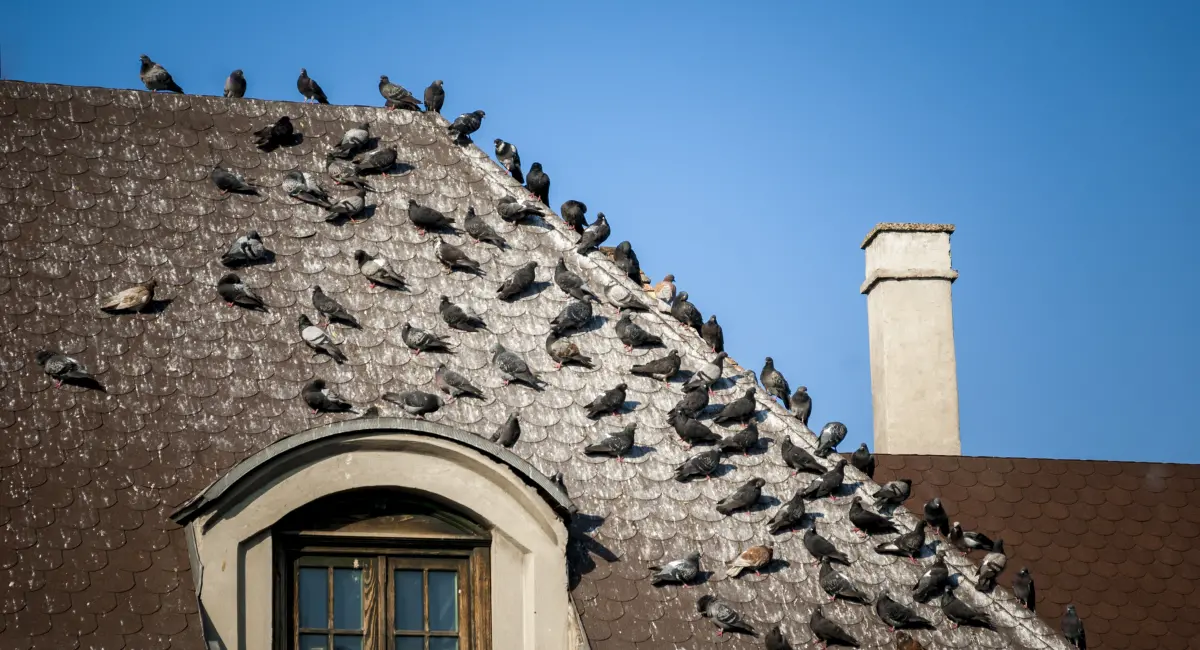
Look for accumulations of bird poo buildup on ledges, skylights, and entry canopies. Nesting debris in gutters, around HVAC units, and beneath badly installed solar panel bird guards are all strong indicators of an active problem. Feathers, broken eggs, and constant bird activity around specific building features are also telling signs. Our guide on Defending Your Chimney from Unwelcome Guests covers how birds exploit structural access points that often go unnoticed.

Bird droppings on a roof

How to Get Rid of Birds & Effective Bird Proofing

One thing many bird species have in common is their adaptability and persistence. Their rapid breeding rate and ability to roost in hard-to-reach locations mean that exclusion is the most effective way to deal with pest birds. It’s also important to note that many pest birds are also protected, so any bird management program needs to align with regulations at federal, state, and local levels.

Commercial Impact and Industry Risks

The costs of a bird infestation go well beyond the inconvenience of droppings. For businesses, unmanaged bird activity creates liability, damages assets, and can put your operating license at risk.

Slip-and-Fall Hazards

Bird droppings on walkways, parking structures, and building entrances create genuine slip-and-fall liability. Wet droppings are as slippery as ice, and businesses that fail to manage the risk can face negligence claims from staff, customers, or visitors.

Roof Damage and HVAC Contamination

Bird droppings can accelerate the breakdown of roofing membranes, block drainage systems, and may introduce debris into HVAC units. Nesting inside air handling equipment is a particularly serious issue, creating contamination risks that affect entire buildings.

Health Code Violations and Audit Risks

For food manufacturing, hospitality, and healthcare businesses, bird activity near or inside a facility is a direct health code violation. A single failed inspection triggered by bird evidence can result in closure notices, fines, or loss of certification.
 

Frequently Asked Questions

Yes, and in several ways. Beyond the structural damage caused by droppings and nesting debris, some pest birds, particularly gulls and geese, can become aggressive near nesting sites. Falling debris, blocked drains leading to water ingress, and HVAC contamination are all real risks for commercial properties that don't have a bird proofing plan in place.

Bird droppings carry bacteria, fungi, and parasites that can cause serious illness. Histoplasmosis, cryptococcosis, and salmonella are among the diseases linked to dried droppings that become airborne during cleaning. Any bird poo cleanup on a commercial site should be handled by trained operatives wearing appropriate PPE, rather than by general maintenance staff.

Many common pest species are protected under the Migratory Bird Treaty Act, which means standard removal methods may be illegal without the right permits. A licensed pest control contractor can assess which species are present, advise on what's legally possible, and apply for any necessary permits before any control work begins.

Yes, in many cases they can. Prolonged exposure to acidic bird droppings can degrade roofing membranes and sealants in ways that some manufacturers classify as improper maintenance, which can invalidate warranty claims. Regular bird poo cleanup and a proactive bird proofing installation are both important steps to keep birds away, protect your roofing investment, and maintain warranty compliance.

Find Your Local Branch

Go

Get in Touch

Contact Assured Environments now to arrange a free risk assessment and explore tailored solutions for your commercial site.

About Us

Learn about Assured Environments, the best commercial pest control for New York and the surrounding area. Get Assured Environments pest control services today.